 Breaking News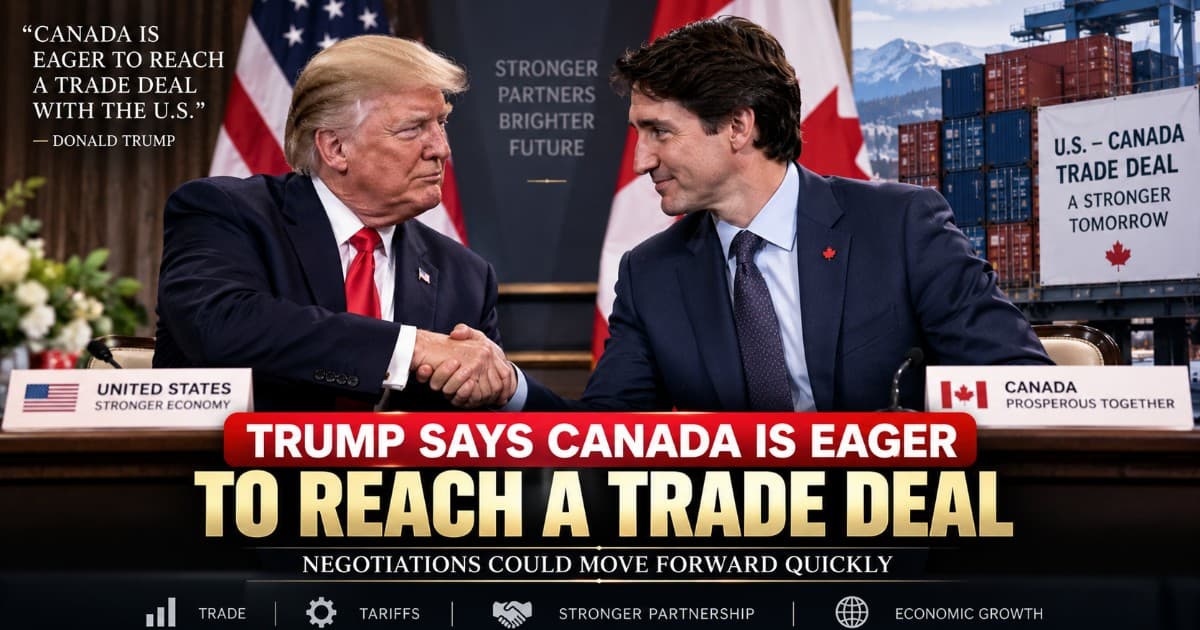
Breaking News
Trump Says Canada 'Very Badly' Wants Trade Deal, Predicts Swift Agreement
By The Daily Ledger1 min read4 views
Donald Trump expressed confidence that a trade agreement with Canada could be finalized within weeks, saying the country is motivated to reach a deal quickly.
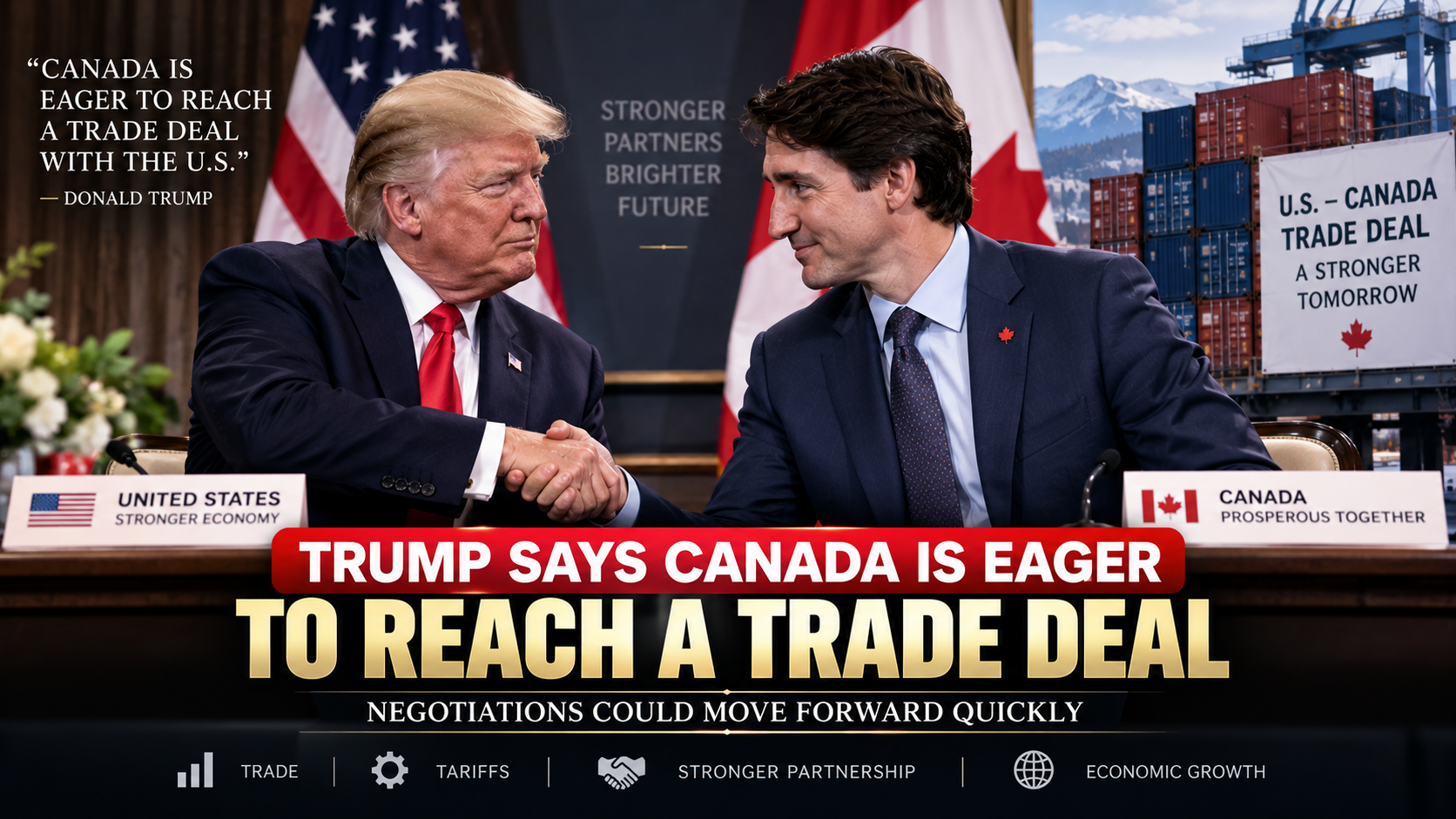
Donald Trump said Wednesday that Canada is strongly motivated to reach a new trade agreement with the United States and that negotiations could conclude relatively quickly.
Speaking to reporters, the former president and current presidential candidate expressed confidence in the pace of trade discussions, suggesting that both nations could finalize terms in the near term. Trump characterized Canada's interest in striking a deal as urgent, framing it as beneficial to both countries.
The comments reflect an ongoing push by Trump to reshape U.S. trade relationships through bilateral agreements rather than multilateral frameworks. Canada and the United States have long been major trading partners, exchanging hundreds of billions of dollars in goods and services annually across sectors including automobiles, energy, agriculture, and manufacturing.
Trade policy has been a central theme in Trump's political platform, with a focus on what he describes as unfair or imbalanced trade relationships. During his previous tenure, his administration renegotiated the North American Free Trade Agreement into the United States-Mexico-Canada Agreement, which took effect in 2020.
The specifics of what Trump envisions in a new agreement—and which issues Canada prioritizes in talks—remain unclear from his recent statements. Trade negotiations typically involve complex discussions spanning multiple industries, tariff rates, and regulatory standards.
Canada's stated position generally emphasizes the importance of maintaining stable trade relationships while protecting domestic industries and workers. The country also coordinates closely with allies on trade matters.
Markets and business groups often monitor high-level trade discussions closely, as tariffs and trade restrictions can affect supply chains, consumer prices, and company profitability across sectors. Both nations' economies are deeply integrated, making trade policy changes potentially significant for employment and growth.


Comments (0)
No comments yet. Be the first to share your thoughts.
Leave a comment
Comments are reviewed before they appear.