 Breaking News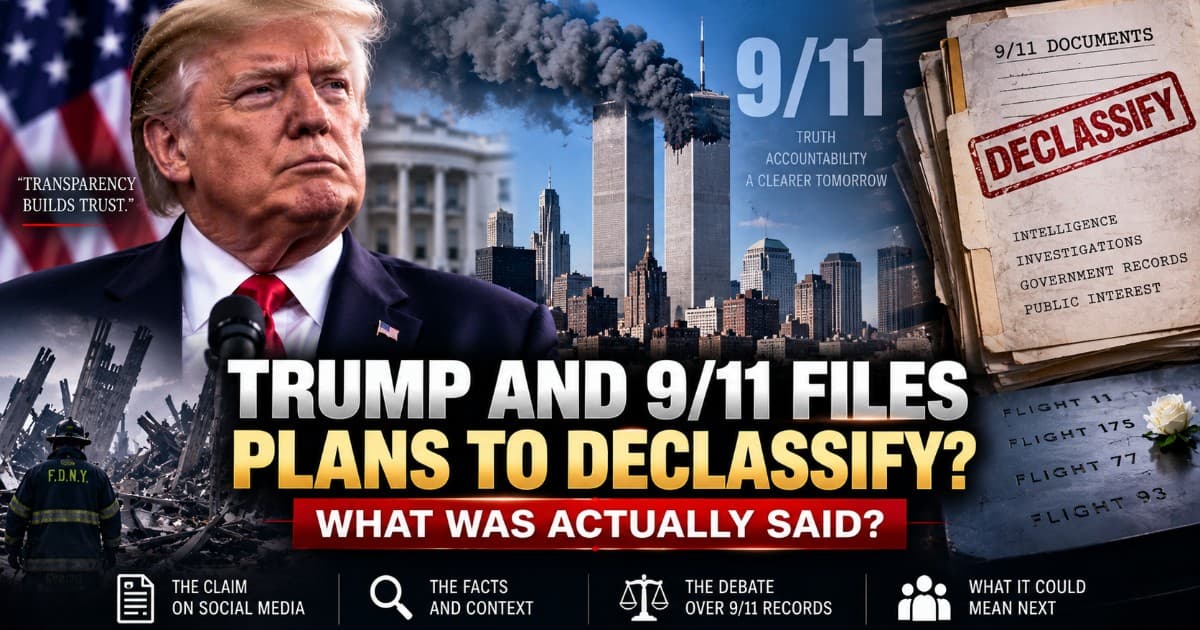
Breaking News
Examining Claims About Trump's 9/11 Declassification Statement
By The Daily Ledger2 min read2 views
A social media post attributed to Donald Trump regarding declassification of 9/11 records has circulated widely.
A claim circulating on social media has renewed debate over declassification of materials related to the September 11 attacks, with some posts attributing a declassification announcement to former President Donald Trump.
The statement has gained traction online, particularly among those who have long advocated for greater government transparency regarding 9/11 investigations. Questions about what documents remain classified and why have persisted for over two decades, with various groups pushing for wider release of materials held by intelligence agencies and the federal government.
The declassification of 9/11-related materials has moved forward in phases since the attacks themselves. Over the years, thousands of documents have been released through official channels, congressional requests, and Freedom of Information Act litigation. However, ongoing disputes remain about what materials stay classified, with officials citing national security concerns while critics argue excessive secrecy prevents public understanding of the attacks' origins and response.
Understanding claims about declassification actions requires examining the precise language used in any announcement, the legal authority behind such statements, and whether proposed actions align with past positions or established policy. Presidential authority over classified materials is real but operates within statutory limits designed to protect intelligence sources, ongoing investigations, and national security interests.
The circulation of the claim reflects broader public interest in government transparency around 9/11. Families of victims, researchers, and advocacy groups have maintained pressure on successive administrations to release additional materials. The emotional resonance and political dimensions of 9/11 documentation mean that claims about declassification often draw significant attention before details are verified.
Verifying such claims requires checking the original source, the exact date and wording of any statement, and comparing it against what has actually been announced through official channels. Social media posts often circulate in incomplete or altered forms, and attribution can become unclear as content spreads across platforms.


Comments (0)
No comments yet. Be the first to share your thoughts.
Leave a comment
Comments are reviewed before they appear.