 World
World
World
Political Stress Is a Real Health Risk, and Researchers Are Paying Attention
By The Daily Ledger3 min read63 views
Mental health experts say chronic exposure to political stress can trigger anxiety, sleep problems, and physical symptoms — and many Americans are feeling it.
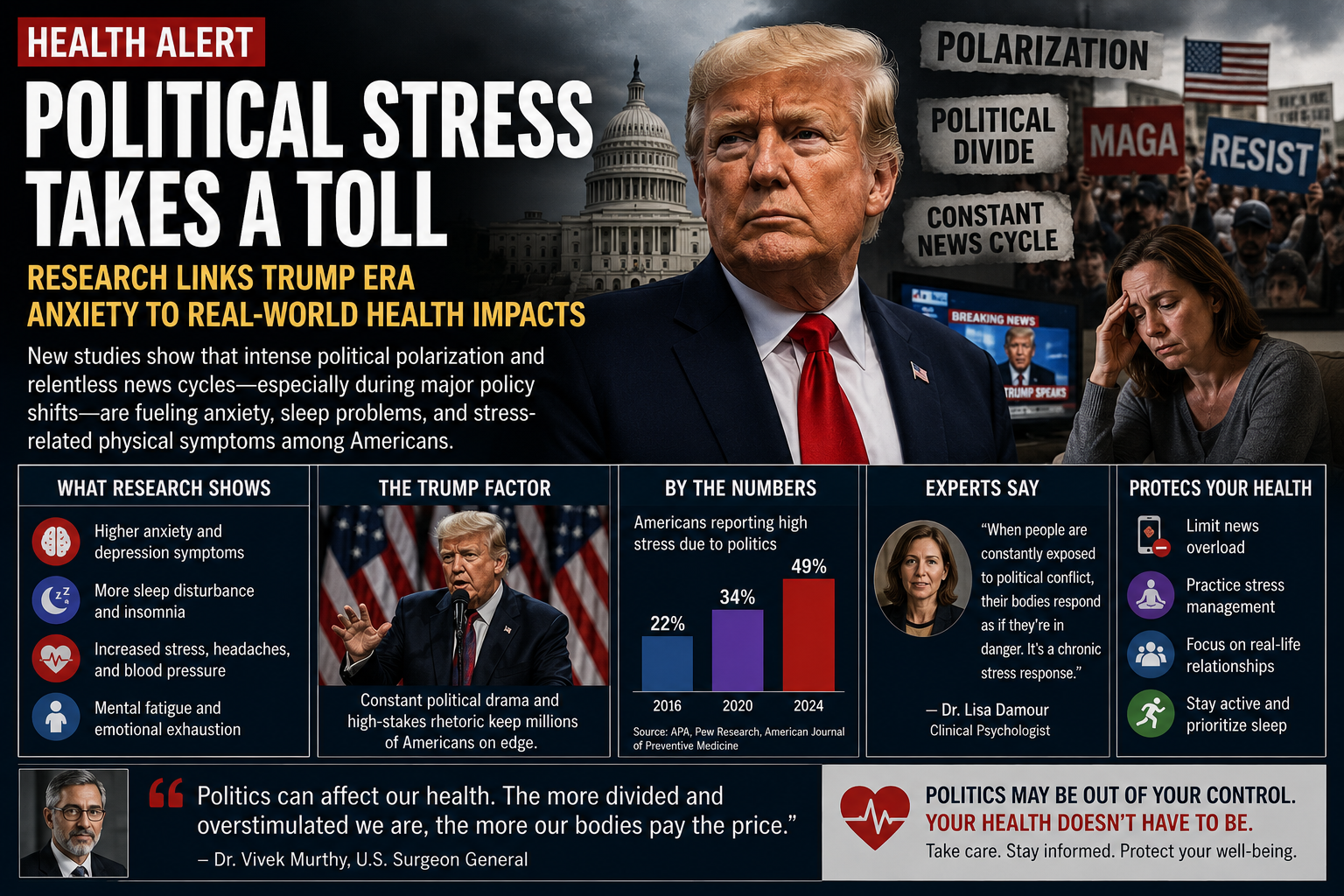
Political Stress Is Real — and It May Be Hurting Your Health
For many Americans, checking the news has become less an act of staying informed and more an exercise in bracing for impact. As Donald Trump's return to the White House reshapes domestic and foreign policy at a rapid pace, mental health professionals across the country say they are seeing the consequences play out in their waiting rooms.
The phenomenon has a name in research circles: political stress. And a growing body of evidence suggests it carries genuine health risks, ranging from disrupted sleep and heightened anxiety to longer-term cardiovascular strain.
Psychologists have long known that chronic stress — regardless of its source — places sustained demands on the body. When the nervous system remains in a state of heightened alertness, it can suppress immune function, elevate blood pressure, and disrupt the hormonal rhythms that regulate sleep and mood. What researchers have more recently turned their attention to is whether politically charged environments can serve as a persistent, population-level stressor rather than an isolated personal one.
Surveys conducted in recent years have found that significant portions of American adults report the political climate as a meaningful source of stress in their lives. That figure has fluctuated alongside election cycles and periods of policy upheaval, but mental health advocates say the baseline has shifted upward over the past decade as partisan tensions have intensified and news consumption has moved increasingly to social media platforms designed to maximize engagement.
That last point matters. Doomscrolling — the habit of compulsively consuming negative news, particularly on smartphones — has emerged as a specific behavior that researchers associate with elevated anxiety and lower psychological wellbeing. Algorithms that surface the most emotionally provocative content can effectively keep users in a state of low-grade alarm for hours at a time, far beyond what traditional news consumption would have produced.
Therapists report that political topics now arise more frequently in clinical conversations than they once did, with some patients describing a sense of helplessness or dread tied directly to news events. Primary care physicians have similarly noted patients presenting with stress-related symptoms who, upon discussion, link their anxiety to the political environment.
Not all stress experts believe the answer is simply to tune out. Some research suggests that passive consumption of distressing political news is more harmful than active civic participation. Volunteering, community organizing, or structured political engagement can provide a sense of agency that buffers against the helplessness that makes political stress particularly corrosive.
For those who find the news cycle genuinely overwhelming, mental health professionals commonly recommend setting deliberate limits on news consumption, scheduling specific times to check headlines rather than allowing constant passive exposure, and maintaining social connections outside of politically charged spaces.
Public health researchers note that political stress is not a new phenomenon, nor one unique to any single administration or party. But the speed and volume of information — and the degree to which political identity has become central to many Americans' sense of self — may be making each cycle harder to metabolically absorb than the last.
#Climate

Comments (0)
No comments yet. Be the first to share your thoughts.
Leave a comment
Comments are reviewed before they appear.