 Breaking News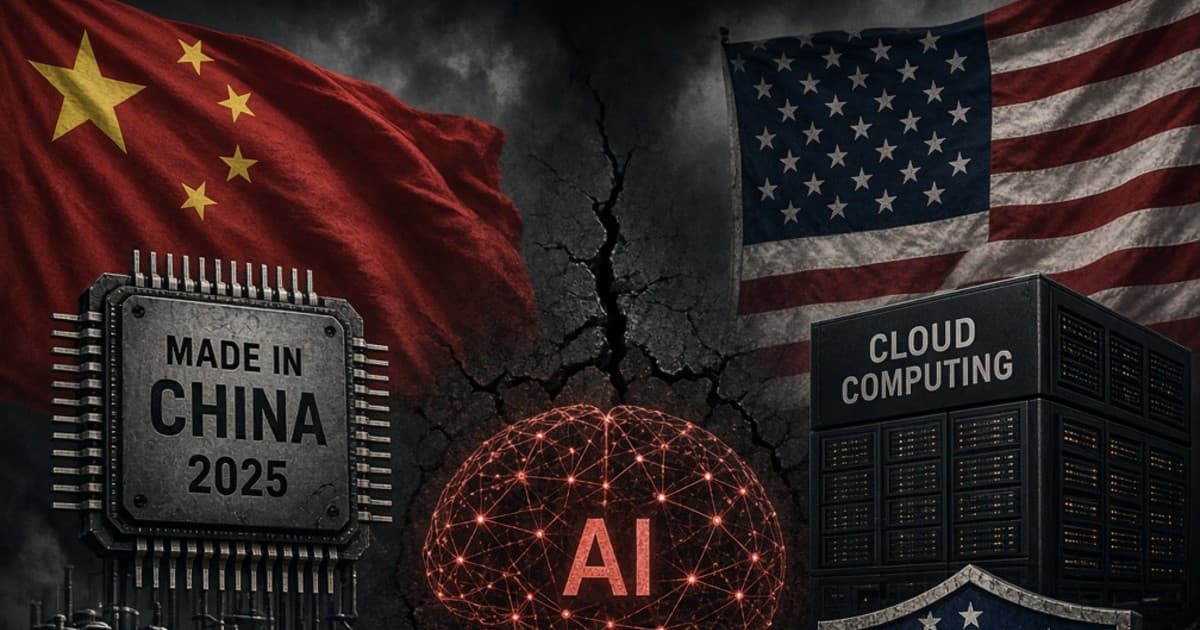
Breaking News
China Accelerates AI Infrastructure Push Amid U.S.-China Tech Competition
By The Daily Ledger2 min read1 views
China is strengthening its position in artificial intelligence by expanding domestic chip production and cloud services, intensifying a technological rivalry…
China is making significant investments in developing homegrown semiconductor and cloud computing capabilities, moves that underscore the intensifying competition between Washington and Beijing over artificial intelligence leadership.
The expansion reflects China's broader strategy to build technological independence and reduce reliance on foreign suppliers for components critical to AI development. Domestic chip production and cloud infrastructure have emerged as central pillars of this approach, as both are foundational to training and deploying advanced AI systems at scale.
The U.S. has long held leading positions in artificial intelligence research and development, supported by major private sector investments and the concentration of top AI talent and research institutions. China has responded with substantial government funding and policy support for its own AI ecosystem, alongside efforts to acquire and develop semiconductor manufacturing expertise.
This technological competition occurs against a backdrop of broader U.S.-China tensions over trade, intellectual property, and supply chain security. The American government has implemented export controls targeting advanced chip technology, attempting to constrain China's access to components necessary for cutting-edge AI applications. These restrictions have motivated Chinese efforts to develop alternative domestic solutions.
The competitive landscape extends across multiple dimensions. Beyond chip design and manufacturing, the two countries are competing for AI talent, competing to establish standards in emerging technologies, and competing to shape how artificial intelligence is regulated and deployed globally. Cloud computing platforms serve as the infrastructure backbone for much of this activity, making investment in data centers and computing resources strategically important.
Policymakers in the United States are closely monitoring China's technological progress and considering what policy tools—including potential additional restrictions, research partnerships, or domestic investment—might be appropriate to maintain American competitiveness. The stakes are understood as high, with AI expected to influence economic productivity, military capabilities, and industrial innovation in coming decades.
China's continued advancement in these areas reflects its recognition that technological self-sufficiency is both strategically necessary and economically valuable. Whether through state-directed industrial policy, partnerships between government and private industry, or direct government investment in research and development, Beijing is clearly committed to reducing the technology gap with the West.


Comments (0)
No comments yet. Be the first to share your thoughts.
Leave a comment
Comments are reviewed before they appear.