 World
World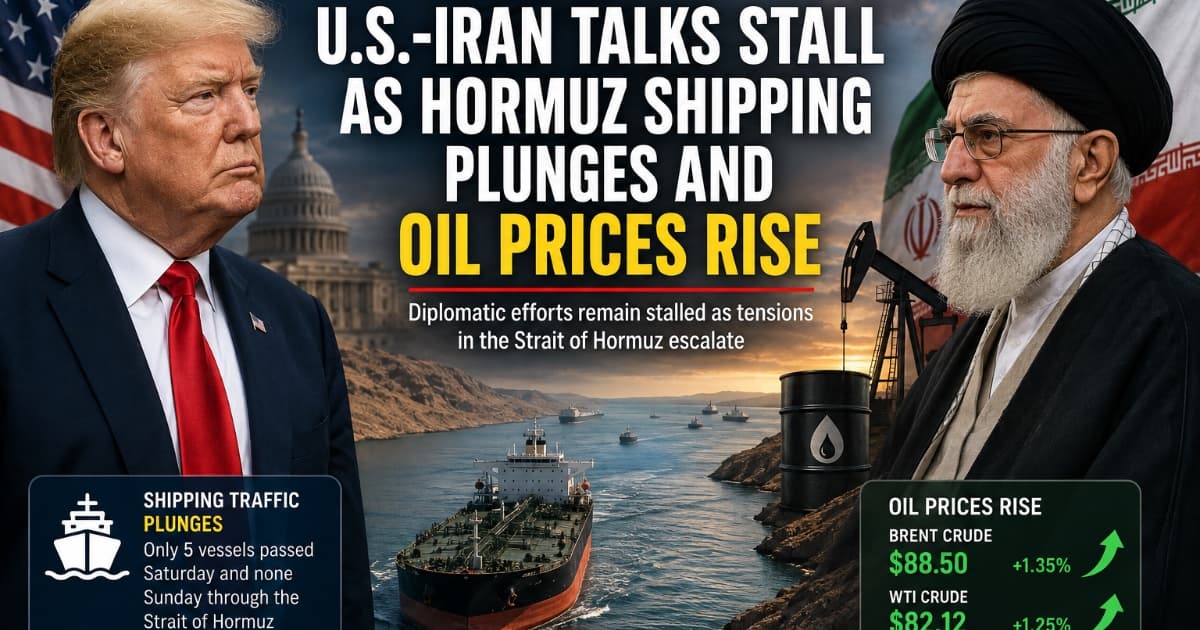
World
U.S.-Iran Talks Stall as Hormuz Shipping Plunges and Oil Prices Rise
By The Daily Ledger5 min read26 views
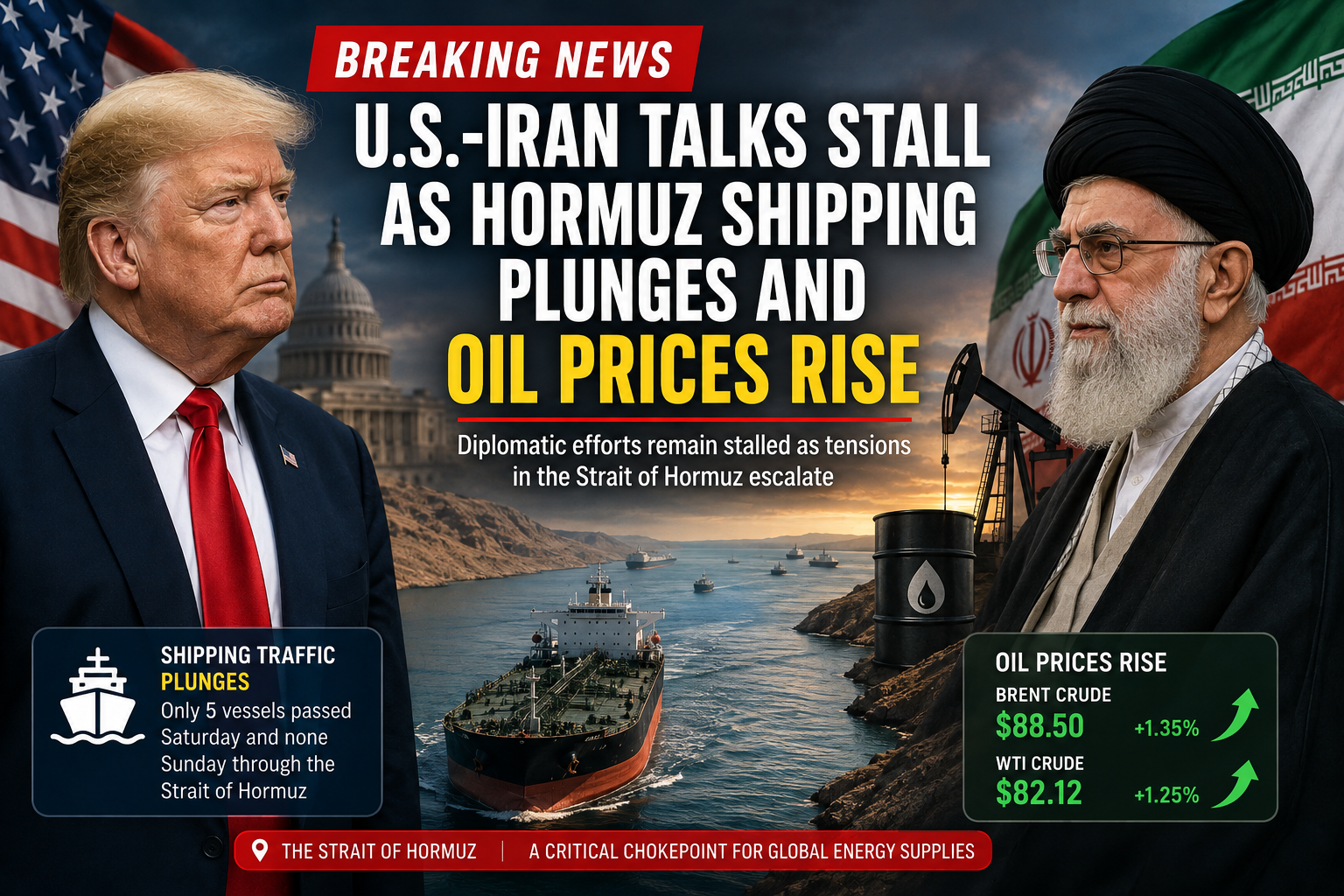
U.S.-Iran diplomatic efforts remain stalled as shipping through the Strait of Hormuz slows dramatically, raising fresh concerns about energy supplies and escalating tensions between Washington and Tehran.
- U.S.-Iran Talks Stall as Hormuz Shipping Plunges and Oil Prices Rise
Diplomatic efforts between the United States and Iran remain stalled as shipping activity through the Strait of Hormuz slows dramatically, adding new uncertainty to the confrontation between Washington and Tehran.
The latest developments come as President Donald Trump’s administration seeks to increase pressure on Iran while attempting to find a diplomatic path out of the conflict.
Iran, however, has not committed to returning to negotiations.
Iranian Foreign Minister Abbas Araghchi said no decision had been made to resume talks with Washington, according to Reuters.
At the same time, commercial shipping through the Strait of Hormuz — one of the world’s most strategically important waterways — has fallen sharply.
Reuters reported that only five vessels passed through the strait on Saturday and none on Sunday, compared with 31 vessels during the previous weekend.
The dramatic slowdown is raising concerns about energy supplies and the possibility of further disruption if tensions escalate.
Why the Strait of Hormuz Is So Important
The Strait of Hormuz connects the Persian Gulf with the Gulf of Oman and the Arabian Sea.
It is one of the world’s most important routes for transporting oil and liquefied natural gas.
Major energy exporters in the Gulf depend heavily on the waterway to move supplies to international customers.
Because of that importance, even the possibility of prolonged disruption can have consequences far beyond the Middle East.
Governments, shipping companies and energy producers are closely monitoring developments.
U.S.-Iran Negotiations Remain Stalled
The collapse in shipping activity comes as hopes for rapid diplomatic progress between Washington and Tehran weaken.
Iranian officials have indicated that no final decision has been made on returning to negotiations.
That leaves considerable uncertainty over whether diplomacy can prevent another escalation.
The Trump administration has simultaneously signaled that it is prepared to increase economic pressure on Tehran.
Trump has said he wants additional pressure placed on Iran, while his administration has several potential tools available to restrict Iranian revenue.
Those measures could include tougher enforcement of sanctions connected to Iranian oil exports and financial transactions.
Trump Considers Greater Economic Pressure
Washington already maintains extensive sanctions targeting Iran.
But the Trump administration could go further.
One potential strategy would involve targeting foreign companies involved in purchasing Iranian oil.
Chinese refiners are particularly important because China remains a major destination for Iranian crude.
Washington could also consider measures against financial institutions facilitating transactions involving Iranian energy exports.
Such measures would attempt to reduce the amount of revenue reaching Tehran.
However, stronger sanctions could also reduce available oil supplies and increase tensions with countries that continue trading with Iran.
Oil Prices React to the Uncertainty
Energy markets are already responding.
Oil prices moved higher as expectations for a rapid U.S.-Iran diplomatic breakthrough weakened and shipping through Hormuz slowed.
The reaction demonstrates how closely global energy markets are following developments in the region.
A prolonged disruption to Hormuz shipping could potentially force energy companies to find alternative transportation routes or delay deliveries.
That could increase transportation costs and tighten supplies.
Trump Faces Pressure Over Gasoline Prices
The Iran confrontation also carries political consequences inside the United States.
Trump has acknowledged that Americans may have to tolerate higher gasoline prices while his administration pursues its objectives against Iran.
Higher crude-oil prices can eventually translate into higher prices at gasoline stations.
That means developments thousands of miles away in the Strait of Hormuz could directly affect American consumers.
A prolonged increase in energy costs could also create additional inflation pressure across the economy.
Transportation, manufacturing and agriculture all depend heavily on energy.
Iran Remains Defiant
Iran has continued to resist Washington’s demands.
Tehran considers the Strait of Hormuz a critical strategic asset and has rejected attempts by Washington to dictate control over the waterway.
The disagreement makes Hormuz one of the most dangerous pressure points in the confrontation.
Any additional attacks on commercial vessels or military escalation around the strait could dramatically increase international pressure for a resolution.
It could also increase the risk of direct confrontation.
Diplomatic Efforts Continue
Despite the hostile rhetoric, diplomatic efforts have not disappeared completely.
The United States and other countries continue exploring potential avenues for negotiations.
European governments have also become involved in efforts aimed at restarting diplomacy.
But there is currently no guarantee those efforts will succeed.
The longer negotiations remain stalled, the greater the possibility that Washington will rely more heavily on sanctions and other forms of economic pressure.
What Happens Next?
Several developments will determine whether the situation improves or deteriorates.
The first is whether Iran agrees to return to negotiations with the United States.
The second is whether commercial shipping through Hormuz begins returning toward normal levels.
The third is whether Trump announces additional sanctions or other economic measures against Tehran.
Any further attacks on vessels would significantly increase the risk of escalation.
A diplomatic breakthrough, meanwhile, could rapidly reduce tensions.
A Critical Moment for Washington and Tehran
The confrontation is reaching another important stage.
Trump wants to increase pressure on Iran without allowing Tehran to strengthen its strategic position.
Iran, meanwhile, is attempting to resist U.S. demands while maintaining leverage through its geographic position and energy exports.
The Strait of Hormuz has become central to that struggle.
The dramatic decline in vessel traffic demonstrates that the consequences are already extending beyond political rhetoric.
International shipping companies, governments and energy producers are now making decisions based on the possibility that the disruption could continue.
Bottom Line
U.S.-Iran negotiations remain stalled while shipping through the Strait of Hormuz has fallen dramatically.
Only five vessels reportedly crossed the waterway Saturday and none Sunday, compared with 31 during the previous weekend.
At the same time, President Trump is considering ways to increase economic pressure on Tehran.
Whether the crisis escalates or moves back toward diplomacy will depend heavily on what happens next in negotiations and in the Strait of Hormuz.
For now, the combination of stalled diplomacy, economic pressure and sharply reduced shipping activity means the U.S.-Iran confrontation remains one of the world’s most important geopolitical stories.
This article is based on reporting available as of August 17, 2026. Developments in the U.S.-Iran situation may change rapidly.
#Policy
Comments (0)
No comments yet. Be the first to share your thoughts.
Leave a comment
Comments are reviewed before they appear.