 Breaking News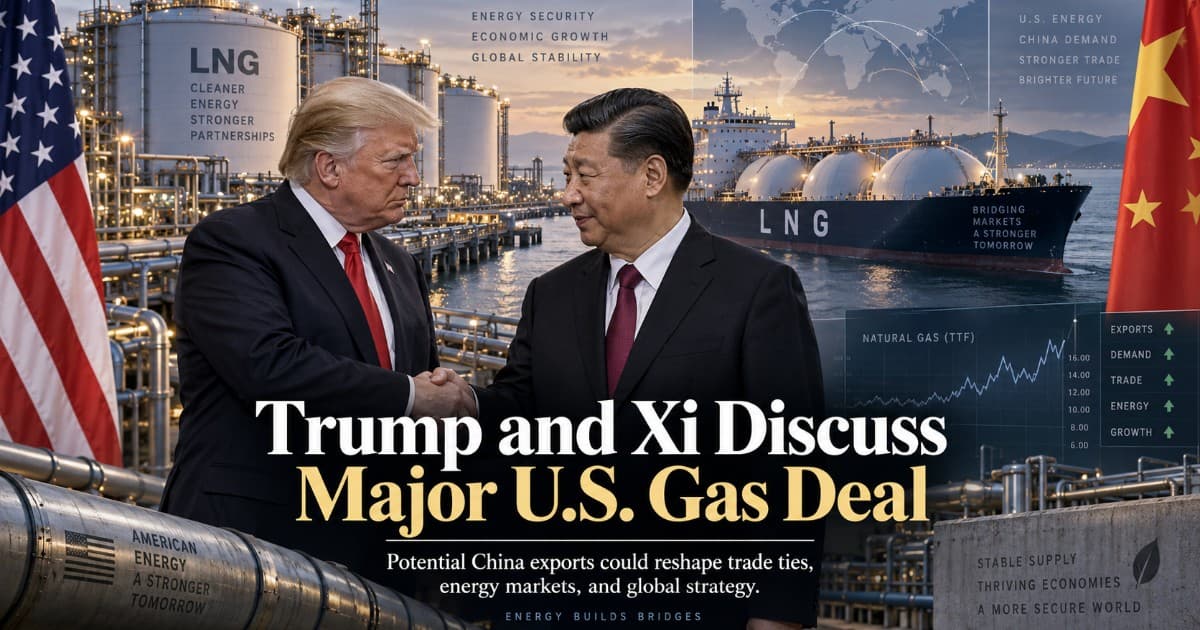
Breaking News
Trump, Xi Discuss Potential $6 Billion Natural Gas Deal
By The Daily Ledger2 min read12 views
Discussions between Trump and Xi Jinping have centered on a potential US natural gas export agreement valued at approximately $6 billion, signaling a shift in…
Discussions between President Trump and Chinese leader Xi Jinping have centered on a substantial energy agreement that could see the United States export approximately six billion dollars' worth of natural gas to China, according to recent reports characterizing the arrangement as mutually advantageous.
The reported deal would represent a significant commercial transaction between the world's two largest economies and reflects broader efforts to reshape trade relations following years of tariffs and economic friction. Natural gas exports from the United States to China have historically been modest relative to global energy trade, making a deal of this scale potentially meaningful for both energy markets and bilateral commerce.
The United States has developed substantial liquefied natural gas export capacity in recent years, positioning itself as a reliable supplier for international markets. China, by contrast, faces ongoing energy demands as it supports industrial growth and electricity generation. The convergence of US production capacity and Chinese demand creates conditions where large-scale trade in this commodity becomes feasible.
Energy transactions between the two nations carry significance beyond immediate commercial value. Resource agreements can reflect and reinforce diplomatic relationships, and they often become centerpieces in broader negotiations over trade imbalances and economic cooperation. Any such deal would likely be framed by both governments as evidence of mutually beneficial engagement.
US natural gas producers and exporters have long sought stable, large-scale buyers to justify continued investment in production and export infrastructure. The prospect of reliable Chinese purchases could influence investment decisions across the sector. Chinese energy planners, meanwhile, view diversified supply sources as essential for energy security and economic stability.
The reported talks underscore the role that commodity trade plays in shaping great-power relations. While such agreements are often presented primarily in commercial terms, they also signal diplomatic positioning and willingness to pursue engagement across traditional lines of disagreement. The framework and terms of any final agreement would provide insight into how both sides view their economic relationship and willingness to cooperate on sectoral issues despite broader tensions.
Comments (0)
No comments yet. Be the first to share your thoughts.
Leave a comment
Comments are reviewed before they appear.