 Breaking News
Breaking News
Trump's Lake Ontario Renaming Proposal Sparks International Outrage and Ridicule
By The Daily Ledger2 min read45 views
A proposal to rename Lake Ontario has ignited fierce criticism from Canadian officials, Indigenous groups, and the American public, with opponents calling the…
'Height of Insanity': Backlash Mounts Over Trump's Lake Ontario Renaming Push
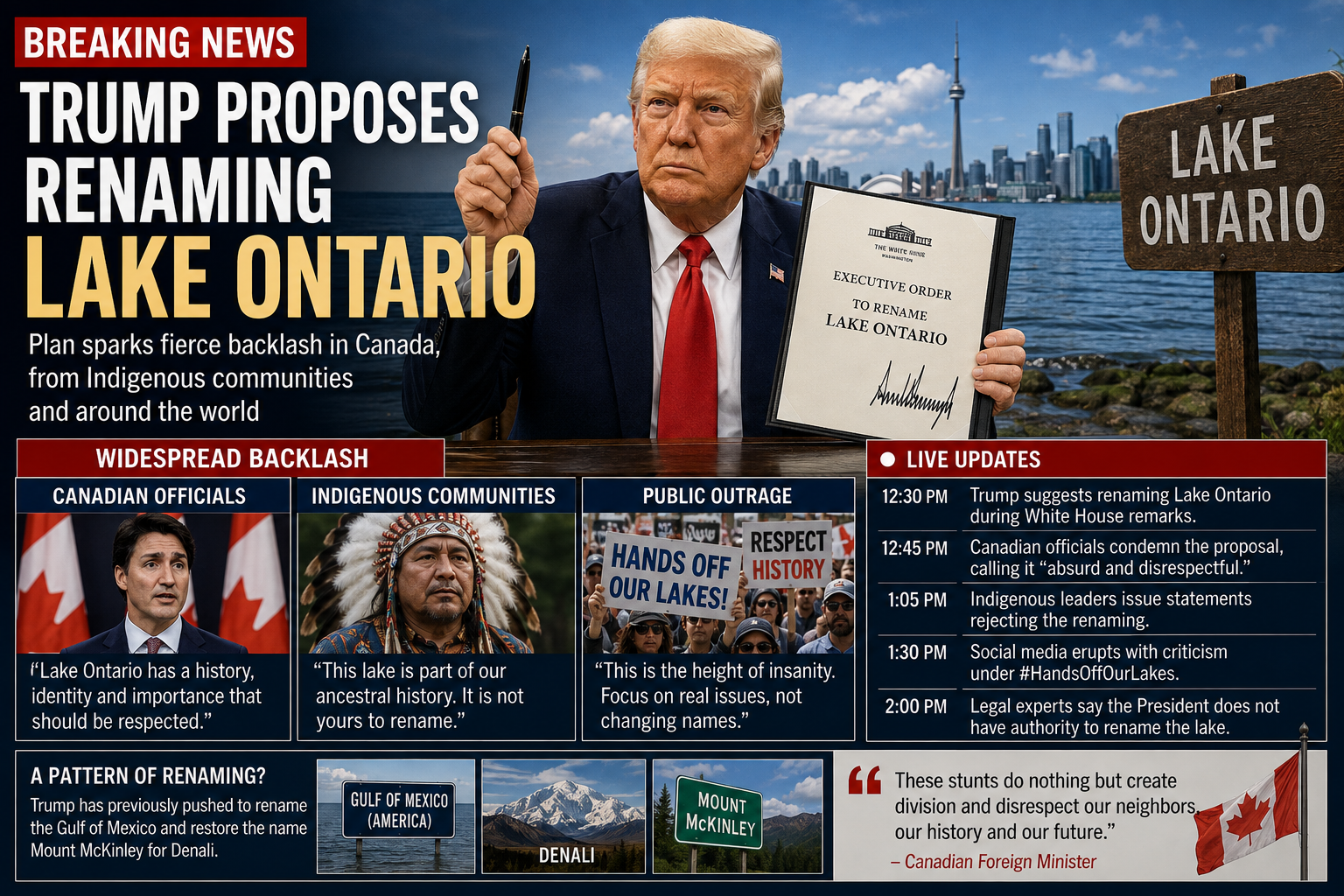
A proposal by President Donald Trump to rename Lake Ontario has ignited sharp condemnation from Canadian officials, Indigenous advocates, and lawmakers on both sides of the border, with critics describing the move as an unprecedented and legally dubious act of provocation.
Trump floated the renaming through Truth Social, his preferred platform for major announcements, in keeping with a broader pattern of using social media to signal contentious policy directions. The post drew an immediate wave of ridicule and alarm, with one official describing it as the "height of insanity" — a phrase that rapidly became the rallying point for opponents online and in press statements.
Lake Ontario, the smallest of the five Great Lakes by surface area, sits along the border between the United States and Canada. Its name derives from Indigenous languages of the region and has been in continuous use for centuries. Any attempt to rename it on U.S. federal maps would not compel Canada to follow suit, legal experts note, meaning the two nations could end up using different names for the same body of water — a scenario critics say would be diplomatically absurd.
The U.S. Board on Geographic Names, the federal body that oversees official place names in the United States, has its own formal processes for approving name changes. It is not clear whether those procedures are being followed or whether the announcement is primarily a political signal rather than the start of a formal renaming process.
The proposal arrives at a moment of already elevated tension between Washington and Ottawa. Trade disputes and pointed rhetoric have strained the relationship in recent months, and Canadian officials were quick to respond to news of the potential renaming with a mixture of exasperation and defiance. The lake's status as a shared international waterway governed in part by longstanding bilateral agreements complicates any unilateral U.S. action further.
Indigenous groups with deep cultural and historical ties to the Great Lakes region have also spoken out, arguing that the existing name carries irreplaceable cultural meaning and that overriding it would be an act of erasure. The Great Lakes have long been central to the traditions, economies, and identities of numerous First Nations and Native American communities.
Opponents in the United States, including members of Congress from Great Lakes states, have questioned both the legal authority behind the move and its diplomatic logic. Supporters of the administration have not yet mounted a prominent public defense.
The story continues to develop, with government officials, environmental groups, and diplomatic observers tracking what steps, if any, follow the initial announcement.
#Climate
Related Stories
Breaking News

Comments (0)
No comments yet. Be the first to share your thoughts.
Leave a comment
Comments are reviewed before they appear.