 Breaking News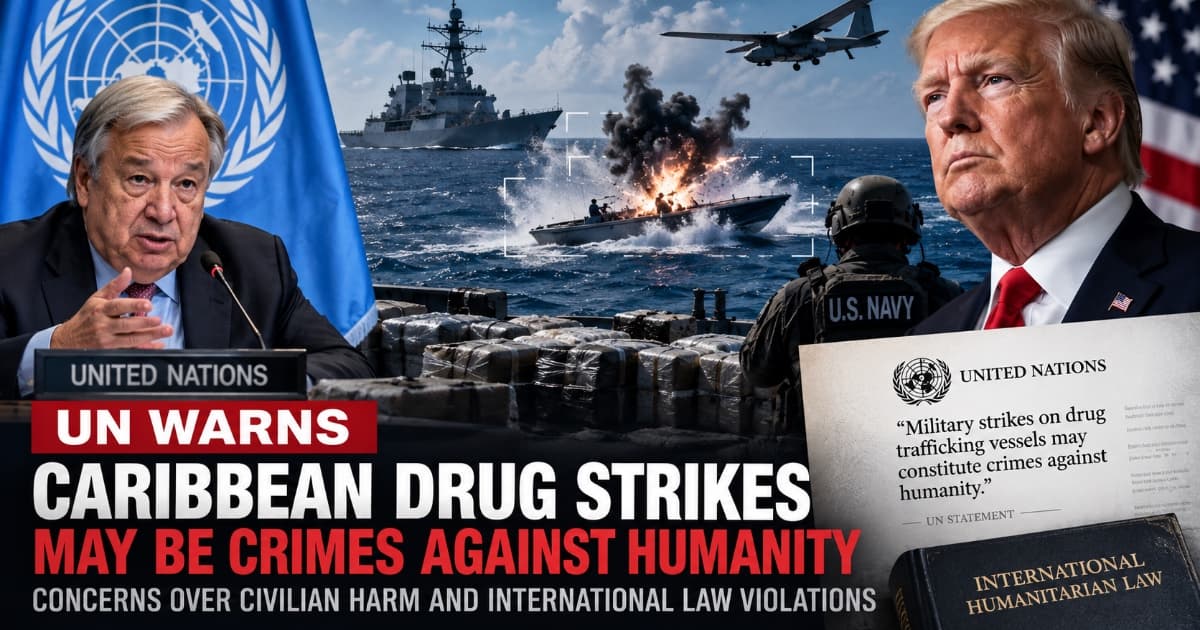
Breaking News
UN Raises Crimes-Against-Humanity Concerns Over Caribbean Drug-Boat Operations
By The Daily Ledger2 min read2 views
A UN body has raised concerns that military strikes targeting drug trafficking vessels may violate international humanitarian law and constitute crimes against…
A United Nations body has expressed concern that military operations targeting drug trafficking vessels in the Caribbean may violate international humanitarian law and constitute crimes against humanity, marking an escalation in scrutiny over how anti-narcotics efforts are conducted at sea.
The allegation centers on the conduct and authorization of strikes against boats suspected of carrying narcotics, with particular focus on whether civilians have been endangered and whether the force used complies with international standards governing armed conflict and law enforcement. Crimes against humanity involve systematic or widespread attacks against civilian populations, and the UN concern suggests a pattern of potential violations rather than isolated incidents.
Maritime drug interdiction in the Caribbean has intensified over recent decades as part of broader efforts to combat cocaine and other narcotics trafficking from South America to North American markets. These operations typically involve coast guard and military vessels from the United States and regional partners conducting searches, seizures, and boarding of suspect vessels. The tactics employed have periodically drawn criticism from humanitarian organizations and legal experts concerned about accountability and civilian protection.
International humanitarian law sets strict limits on the use of force, requiring that operations distinguish between combatants and civilians and that any harm to civilians be proportional to legitimate military objectives. At sea, these standards become complex when enforcement targets non-state actors operating merchant vessels, where civilian crew members may be present alongside those involved in smuggling operations.
The UN statement reflects broader questions about how aggressive drug enforcement can be conducted within legal and humanitarian constraints. As drug trafficking organizations have become more sophisticated, enforcement responses have grown more forceful, creating tension between security objectives and international legal obligations.
The allegations are likely to intensify debates over the appropriate scope and methods of anti-narcotics operations, with potential implications for how the United States and allied nations conduct future maritime enforcement in the region. Accountability mechanisms and investigation into specific incidents remain uncertain.

Comments (0)
No comments yet. Be the first to share your thoughts.
Leave a comment
Comments are reviewed before they appear.