 Breaking News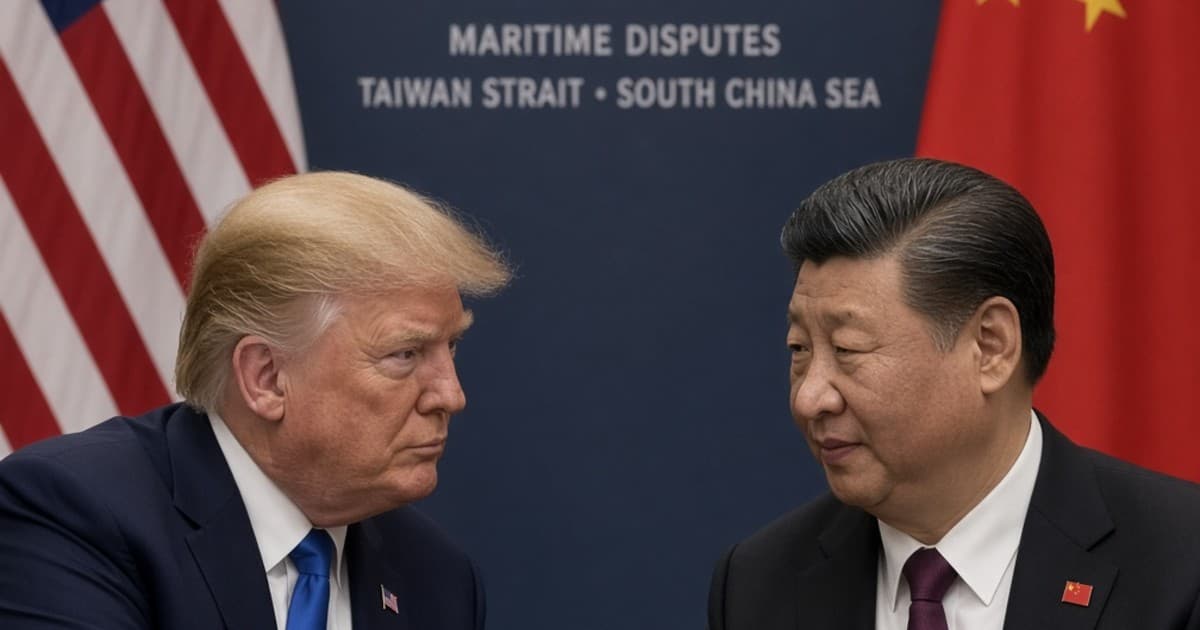
Breaking News
U.S. and China Navigate Competing Interests in Key Waterways
By The Daily Ledger2 min read3 views
A summit between U.S. and Chinese leaders highlights competing visions for control and freedom of navigation in two contested maritime regions with global…
A summit between American and Chinese leaders illuminated the starkly different ways the two superpowers view critical waterways in Asia, underscoring persistent friction over maritime sovereignty and regional influence.
The Taiwan Strait and South China Sea represent two of the most strategically contested bodies of water in the world. Both sit at the intersection of economic and military competition between Washington and Beijing, with implications that extend far beyond Asia.
For the United States, these regions are defined by the principle of freedom of navigation. American military vessels regularly transit the Taiwan Strait and conduct operations in the South China Sea, asserting the right to move freely through international waters. This posture reflects a broader commitment to maintaining an open Indo-Pacific and preventing any single power from controlling critical sea lanes through which trillions of dollars in global commerce flows annually.
China, by contrast, views these waters through a lens of territorial claim and national sovereignty. Beijing asserts that Taiwan is an integral part of Chinese territory and maintains extensive claims over portions of the South China Sea based on historical arguments. The Chinese military has expanded its presence in the region through island construction and enhanced coastal defenses, signaling resolve to enforce its vision of maritime boundaries.
The two nations' competing interests create a volatile dynamic. Taiwan remains a central point of contention, with China viewing increased international support for the island as interference in internal affairs while the United States maintains security commitments that keep the island armed and defended.
In the South China Sea, the situation is complicated by multiple claimants. Vietnam, the Philippines, Malaysia, and Brunei all hold overlapping territorial claims that complicate any bilateral resolution. The presence of vast natural resources and control over shipping lanes adds economic urgency to the military dimensions of the dispute.
A summit between the two leaders provides a window into how each side intends to manage these tensions. Whether discussions move toward de-escalation or entrench existing positions will shape regional stability and the global balance of power for years to come.


Comments (0)
No comments yet. Be the first to share your thoughts.
Leave a comment
Comments are reviewed before they appear.