 Breaking News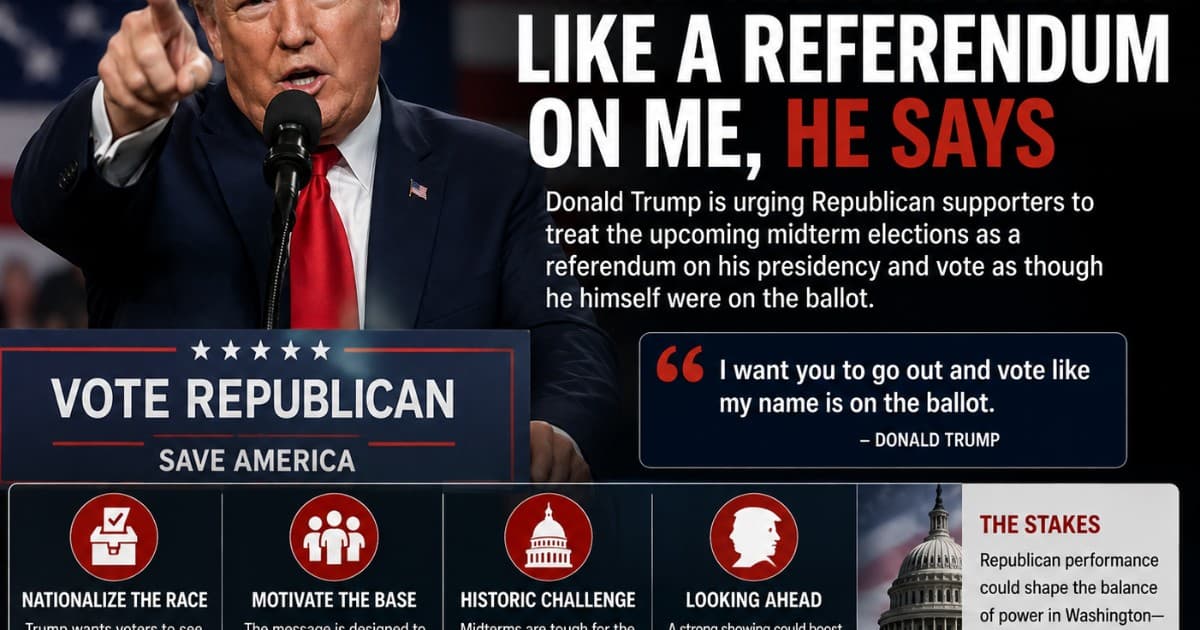
Breaking News
Trump Urges Supporters to Treat Midterms as a Vote on Him Personally
By The Daily Ledger2 min read43 views
Donald Trump is asking Republican voters to treat the midterm elections as a personal referendum on his leadership, urging them to vote as if he were on the…
Trump Asks Supporters to Vote in Midterms as Though He Were on the Ballot
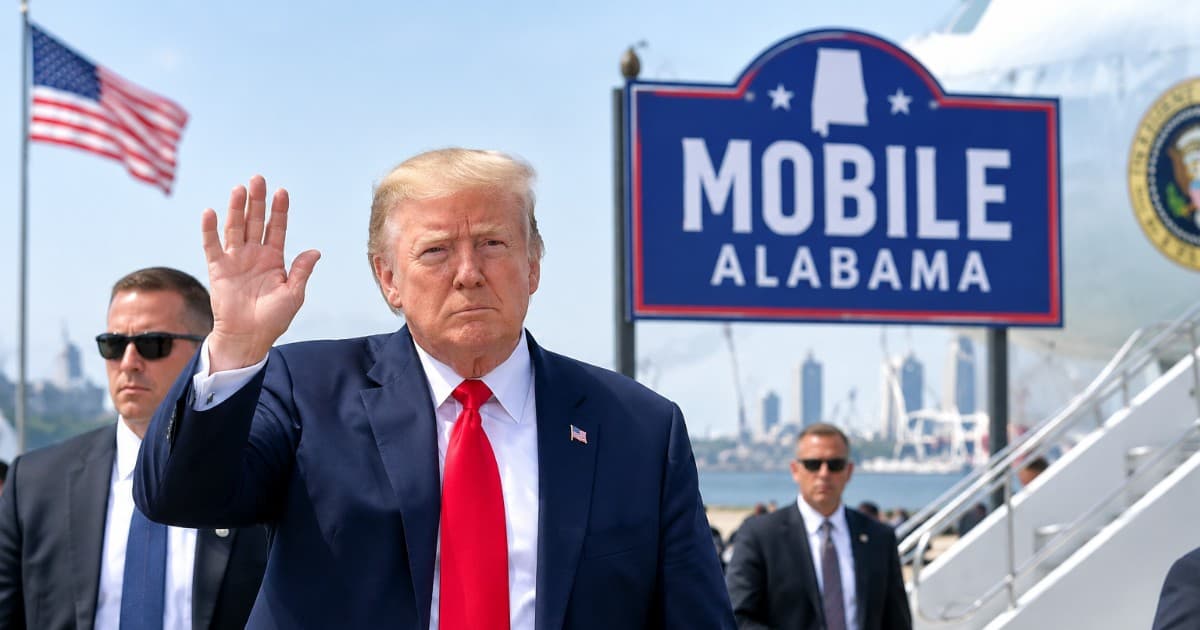
Former President Donald Trump is urging Republican voters to approach the upcoming midterm elections as a personal referendum on his leadership, telling supporters to cast their ballots as though he himself were running.
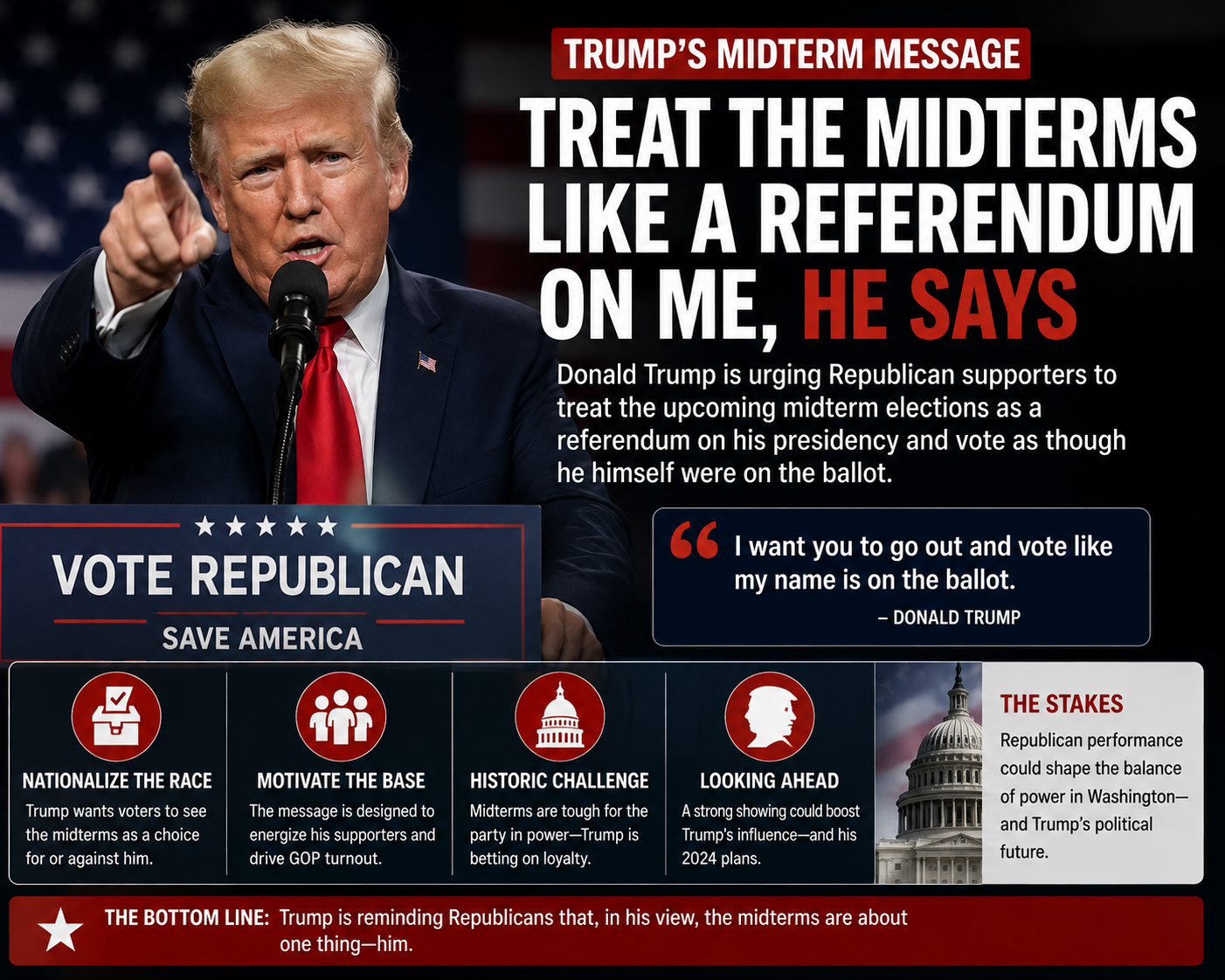
"Pretend, please, that I'm on the ballot," Trump said in a recent appeal to his base, framing the elections in starkly personal terms and asking supporters to channel the energy of a presidential contest into races for Congress and state offices.
The message is a calculated attempt to nationalize a midterm cycle that, by historical pattern, tends to disadvantage the party occupying the White House. Trump, as a former president rather than an incumbent, is making the unusual argument that his own political fate — and the future of the movement he leads — rests on the outcome of races in which his name does not appear.
It is a strategy rooted in a straightforward logic: Trump's base is most motivated when it believes he is personally at stake. By casting November's elections as a proxy fight over his legacy, Trump and his advisers appear to be betting they can replicate the turnout intensity that characterized his own presidential campaigns.
The appeal also serves to reinforce his grip on the Republican Party. Dozens of congressional and gubernatorial candidates across the country have sought and received Trump's endorsement, and his midterm message ties their fortunes directly to his brand. For those candidates, the framing offers a turnout boost; for Trump, it deepens the party's identification with him ahead of what is widely expected to be another presidential bid.
Not everyone within Republican circles views the strategy as an unambiguous asset. In competitive suburban districts where the party hopes to win back seats, some operatives have expressed concern that centering the election on a polarizing former president could energize Democratic voters as much as Republican ones. Swing voters who backed Republicans in past cycles but have shown ambivalence toward Trump personally represent a constituency that such messaging may struggle to reach.
Democrats, for their part, have shown little reluctance to accept the premise Trump is offering. Party leaders have increasingly sought to make Trump a central figure in their own midterm messaging, arguing that Republican candidates embody an agenda tied to the former president's record and rhetoric.
The midterm results are likely to carry significant weight for Trump's political future. A strong Republican performance could be read as an endorsement of his continued leadership of the party, while a disappointing showing could open space for rivals within the GOP to challenge his dominance. Either way, Trump has made clear he does not intend to recede from the political landscape before voters have their say.
#Climate
Related Stories
Breaking News

Comments (0)
No comments yet. Be the first to share your thoughts.
Leave a comment
Comments are reviewed before they appear.