 Breaking News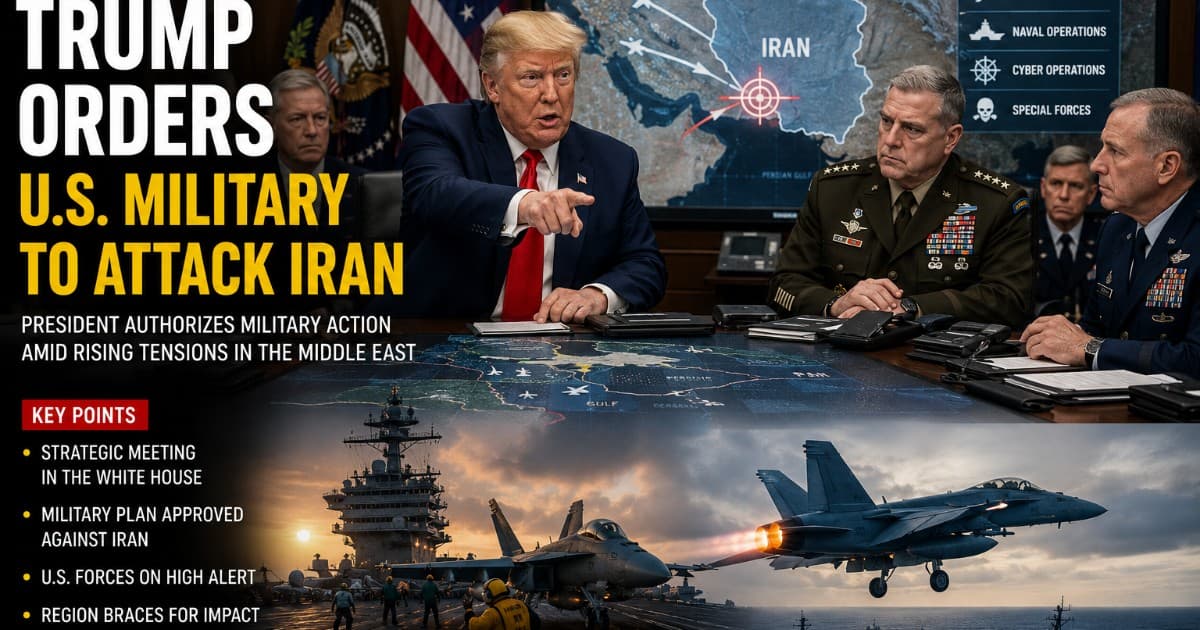
Trump’s Iran War Strategy Faces Critical Test as Diplomacy Stalls and Tensions Rise
By The Daily Ledger5 min read21 views
President Donald Trump’s military campaign against Iran is entering another critical phase as diplomatic efforts remain stalled, Strait of Hormuz shipping slows and Washington considers increasing economic pressure on Tehran.
Trump’s Iran War Strategy Faces Critical Test as Diplomacy Stalls and Tensions Rise
President Donald Trump's strategy toward Iran is entering another critical period as military confrontation, economic pressure and stalled diplomacy continue to shape one of the world's most dangerous geopolitical conflicts.
Trump authorized Operation Epic Fury earlier in 2026, launching a major U.S. military campaign against Iran.
The White House described the operation as an effort to eliminate threats posed by Iran and prevent Tehran from developing a nuclear weapon.
Months later, however, the confrontation remains unresolved.
Diplomatic attempts to establish a lasting settlement have struggled, shipping through the Strait of Hormuz has been severely disrupted and Washington is considering additional economic measures against Tehran.
Trump Authorized Military Action Against Iran
The current confrontation entered a dramatically different phase when Trump authorized Operation Epic Fury.
The operation involved U.S. military action against Iranian targets and represented one of the most consequential decisions of Trump's second presidency.
The administration argued that military force was necessary to confront threats posed by Tehran and its nuclear capabilities.
The campaign dramatically escalated tensions between the United States and Iran and reshaped security conditions across the Middle East.
Diplomacy Has Yet to Produce a Lasting Settlement
Military action was followed by efforts to establish a diplomatic framework between Washington and Tehran.
Those negotiations have not produced a permanent settlement.
Iran said last week that there had been no meaningful progress toward reviving an interim arrangement with the United States.
Major disagreements remain over sanctions, Iran's nuclear program, shipping access and the Strait of Hormuz.
Iranian officials have also said no decision has been made on whether to resume direct negotiations with Washington.
That leaves the future of diplomacy uncertain.
Strait of Hormuz Becomes a Major Flashpoint
The Strait of Hormuz has emerged as one of the most consequential parts of the confrontation.
The narrow waterway connects the Persian Gulf with international shipping routes and serves as a critical corridor for global energy supplies.
Shipping activity has fallen dramatically amid heightened security concerns.
Recent data cited by Reuters showed only five vessels transiting the strait on Saturday and none on Sunday, compared with 31 during the previous weekend.
The slowdown illustrates how the conflict is affecting international commerce far beyond Iran and the United States.
Washington Considers More Economic Pressure
Trump is also looking beyond military force.
His administration is considering additional ways to increase economic pressure on Tehran.
Potential measures include further sanctions targeting entities involved in Iranian oil exports and financial transactions.
Chinese refiners purchasing Iranian crude could become targets of secondary sanctions.
Washington could also potentially increase pressure on financial institutions processing Iran-related transactions.
The objective would be to further restrict Tehran's access to international revenue and supplies.
Trump Signals a Tougher Position
Trump has continued using strong rhetoric toward Iran while arguing that Tehran must make concessions.
At the same time, the administration faces a difficult strategic calculation.
Additional military escalation could increase the risk of a wider regional conflict.
But reducing pressure without obtaining concessions could be portrayed as allowing Iran to strengthen its position.
Economic sanctions therefore offer Washington another method of increasing pressure without immediately expanding direct military operations.
Iran Remains Defiant
Iran has shown little indication that it intends to accept Washington's demands without significant concessions in return.
Tehran has continued challenging the United States over sanctions, shipping and control of the Strait of Hormuz.
Iranian officials have also accused Washington of failing to honor elements of previous diplomatic arrangements.
The result is a standoff in which both governments accuse the other of preventing progress.
Energy Security Remains at Risk
The confrontation has significant consequences for global energy security.
Oil markets remain highly sensitive to developments around Iran and the Strait of Hormuz.
Any major disruption to regional energy exports could affect countries far beyond the Middle East.
The situation has already forced the United States to adopt emergency measures intended to protect domestic energy transportation and supplies.
A further escalation could increase pressure on governments and companies to find alternative shipping routes and energy sources.
Military Options Remain in the Background
The United States continues to maintain substantial military capabilities in the region.
But there is an important distinction between the military campaign Trump previously authorized and speculation about what he might order next.
As of August 17, there is no verified announcement that Trump has issued a new order today for another major attack on Iran.
Videos depicting Trump issuing such an order should therefore not be presented as authentic footage of a current event unless supported by an official announcement.
The real story is that the existing conflict remains unresolved and Washington continues evaluating how to pressure Tehran.
What Happens Next?
Several developments could determine the next stage of the confrontation.
A renewed diplomatic initiative could reduce tensions and establish a pathway toward a more durable settlement.
Additional U.S. sanctions could instead increase economic pressure while avoiding an immediate expansion of military operations.
A major attack on shipping or U.S. forces could change that calculation rapidly.
Another possibility is a prolonged stalemate in which military pressure, sanctions and intermittent negotiations continue simultaneously.
Bottom Line
President Trump's military campaign against Iran has entered a difficult new phase.
Operation Epic Fury demonstrated that Trump was willing to authorize direct military action against Tehran.
But military force has not eliminated the broader political and diplomatic confrontation.
Washington and Tehran remain divided over sanctions, nuclear issues and the Strait of Hormuz, while disruptions to international shipping continue.
Trump is now considering additional economic pressure as his administration searches for leverage over Tehran.
Whether the next phase is dominated by diplomacy, sanctions or renewed military escalation remains uncertain.
For now, the U.S.-Iran conflict remains one of the most consequential geopolitical crises facing the Trump administration.
This article reflects verified reporting available as of August 17, 2026. It does not claim that President Trump issued a new military attack order today.
Related Stories
Breaking News
Comments (0)
No comments yet. Be the first to share your thoughts.
Leave a comment
Comments are reviewed before they appear.