 Breaking News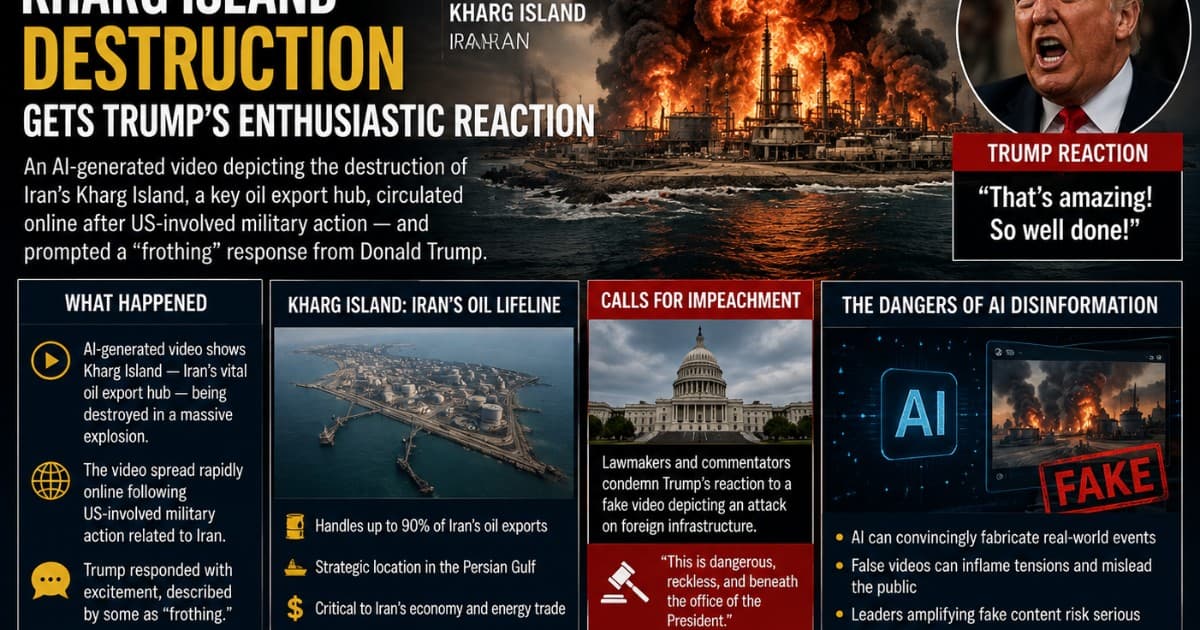
Breaking News
Trump's Enthusiasm for AI-Generated Iran Strike Video Sparks Fresh Impeachment Demands
By The Daily Ledger2 min read6 views
Donald Trump's public enthusiasm for an AI-generated video showing Iran's Kharg Island destroyed has triggered impeachment calls and a fresh debate over…
Impeachment Calls Mount After Trump Reacts to AI Video Showing Iran's Kharg Island 'Destroyed'
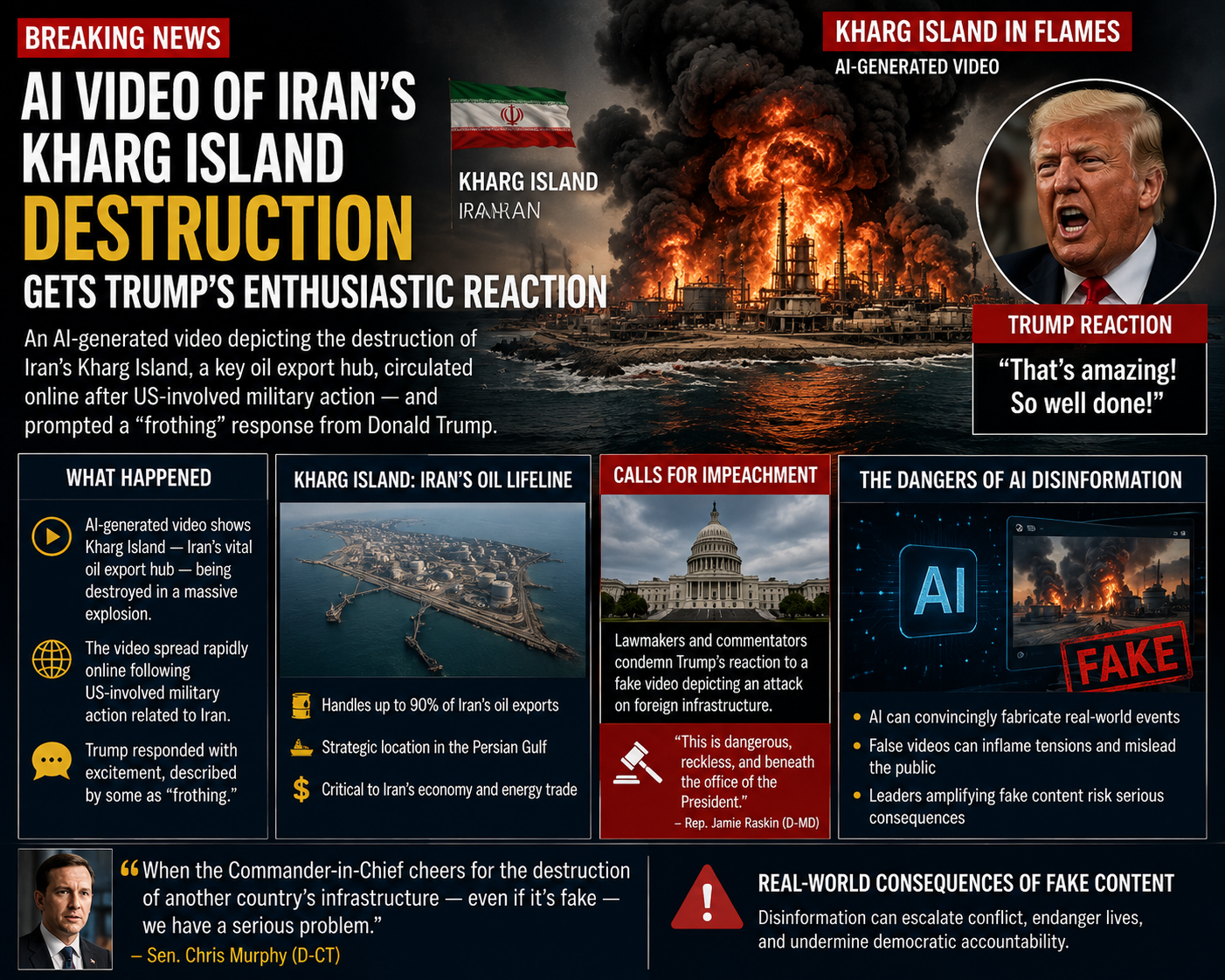
A wave of impeachment demands has swept parts of the American political landscape after Donald Trump publicly expressed enthusiasm for an artificial-intelligence-generated video purporting to show Kharg Island, Iran's most strategically vital oil export hub, being blown apart.
The video, which was not a recording of any real event, spread rapidly across social media platforms before drawing a response from Trump that critics characterized as gleeful and irresponsible. For political opponents, the moment crystallized longstanding concerns about the former — and current — president's relationship with unverified and fabricated content, particularly when that content touches on sensitive matters of war and diplomacy.
Kharg Island sits in the northern Persian Gulf and serves as the exit point for the vast majority of Iran's crude oil exports. A genuine strike on the facility would constitute one of the most significant acts of military escalation in the region in decades, with the potential to send global energy markets into turmoil and draw in multiple state actors. Critics argued that a sitting president publicly reveling in a fabricated depiction of such an attack — however synthetic its origins — sends a dangerous signal both domestically and abroad.
Some lawmakers and commentators moved quickly to frame Trump's reaction as an impeachable offense, arguing that amplifying AI-generated disinformation depicting an attack on a foreign nation's infrastructure represents a fundamental breach of presidential responsibility. Others suggested the conduct, while alarming, fell short of the constitutional standard of high crimes and misdemeanors required to trigger formal impeachment proceedings.
The episode has reignited a wider debate about the role of AI-generated video in political discourse. Synthetic media tools capable of producing convincing footage of events that never occurred have become increasingly accessible, and platforms have struggled to keep pace with the volume of AI content circulating on their networks. This incident stands as one of the starkest examples yet of fabricated footage reaching the highest levels of political commentary.
Trump and his allies have not, as of the latest available information, distanced him from the video or walked back his reaction. The White House's posture has remained consistent with broader administration rhetoric on Iran, which has at times combined pressure and provocation.
Iran's government and state media have been attuned to any content suggesting military action against the country's infrastructure, and the spread of the video — along with the American president's response to it — was unlikely to go unnoticed in Tehran. The incident arrives against a backdrop of unresolved tensions over Iran's nuclear activities and a broader regional environment shaped by years of proxy conflict and intermittent diplomacy.
For Democrats and some independent voices, the moment is being held up as evidence that Trump's conduct in office poses a continuing risk — not only to domestic political norms, but to the country's credibility and stability on the world stage.
Comments (0)
No comments yet. Be the first to share your thoughts.
Leave a comment
Comments are reviewed before they appear.