 Breaking News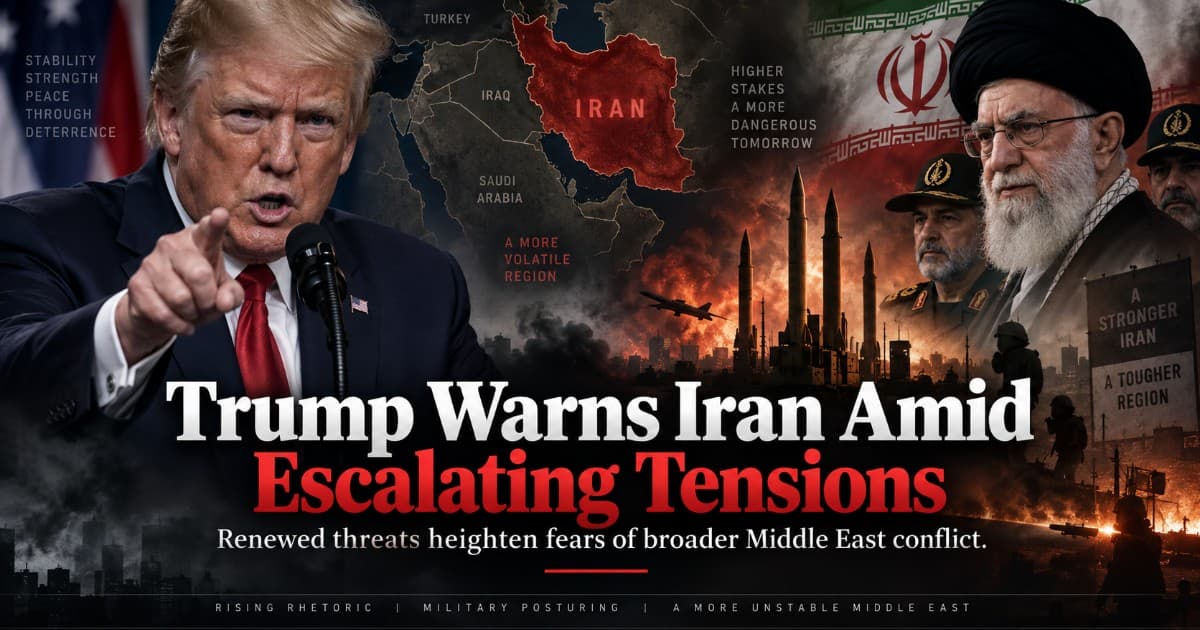
Breaking News
Trump Issues Stark Warning to Iran as Tensions Escalate Over Threatened Strikes
By The Daily Ledger2 min read10 views
Tensions between the United States and Iran have intensified following an exchange of warnings, with former President Trump issuing strong rhetoric in response…
Tensions between the United States and Iran have escalated sharply, with former President Donald Trump issuing a direct and forceful warning toward Tehran following Iranian threats of military action.
Trump's statement marked a hardening of rhetoric after Iranian officials warned of what they characterized as retaliatory strikes. The exchange reflects the ongoing volatility that has characterized US-Iran relations over the past several years, with both sides employing increasingly stark language regarding potential military confrontation.
The timing of the latest exchange occurs against a backdrop of longstanding friction between Washington and Tehran. The two nations have clashed repeatedly over Iran's nuclear program, its regional military activities, and broader questions of Middle East stability. Previous administrations have pursued varied diplomatic and military strategies in responding to Iranian actions, ranging from sanctions to direct military strikes on Iranian targets.
Trump has historically taken a more confrontational approach toward Iran compared to some of his predecessors, withdrawing from international nuclear agreements and implementing stringent economic sanctions. His tendency toward direct, combative language in foreign policy disputes has been consistent across multiple global flashpoints.
The Iranian government's warning of potential strikes represents a serious escalatory step, signaling readiness to move beyond rhetorical posturing. Such threats typically arise in response to what Iranian leadership perceives as American aggression or destabilizing actions in the region.
The exchange raises concerns among regional observers and international observers about the potential for military conflict. The Middle East remains a volatile region with multiple armed powers, and direct US-Iran military engagement could have significant ripple effects across the broader area, potentially drawing in allied nations and complicating existing conflicts.
Both nations have demonstrated in past instances a willingness to use military force when they perceive their interests to be threatened. The question of whether the current rhetoric represents genuine escalation toward conflict or tactical posturing for negotiating advantage remains unclear.
Comments (0)
No comments yet. Be the first to share your thoughts.
Leave a comment
Comments are reviewed before they appear.