 Breaking News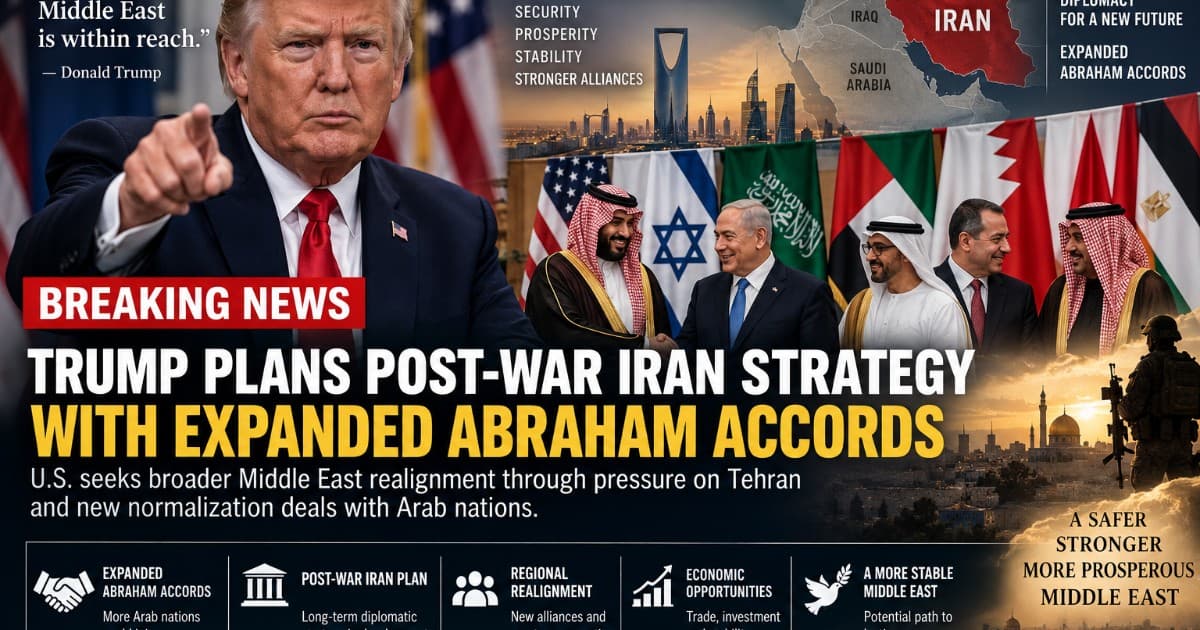
Trump Administration Eyes Post-War Iran Blueprint as Abraham Accords Expansion Gains Momentum
By The Daily Ledger2 min read3 views
The Trump administration is developing a strategy for Iran after a potential conflict while pushing to bring more Arab nations into the Abraham Accords…
US Developing Post-War Iran Strategy Alongside Push to Expand Abraham Accords
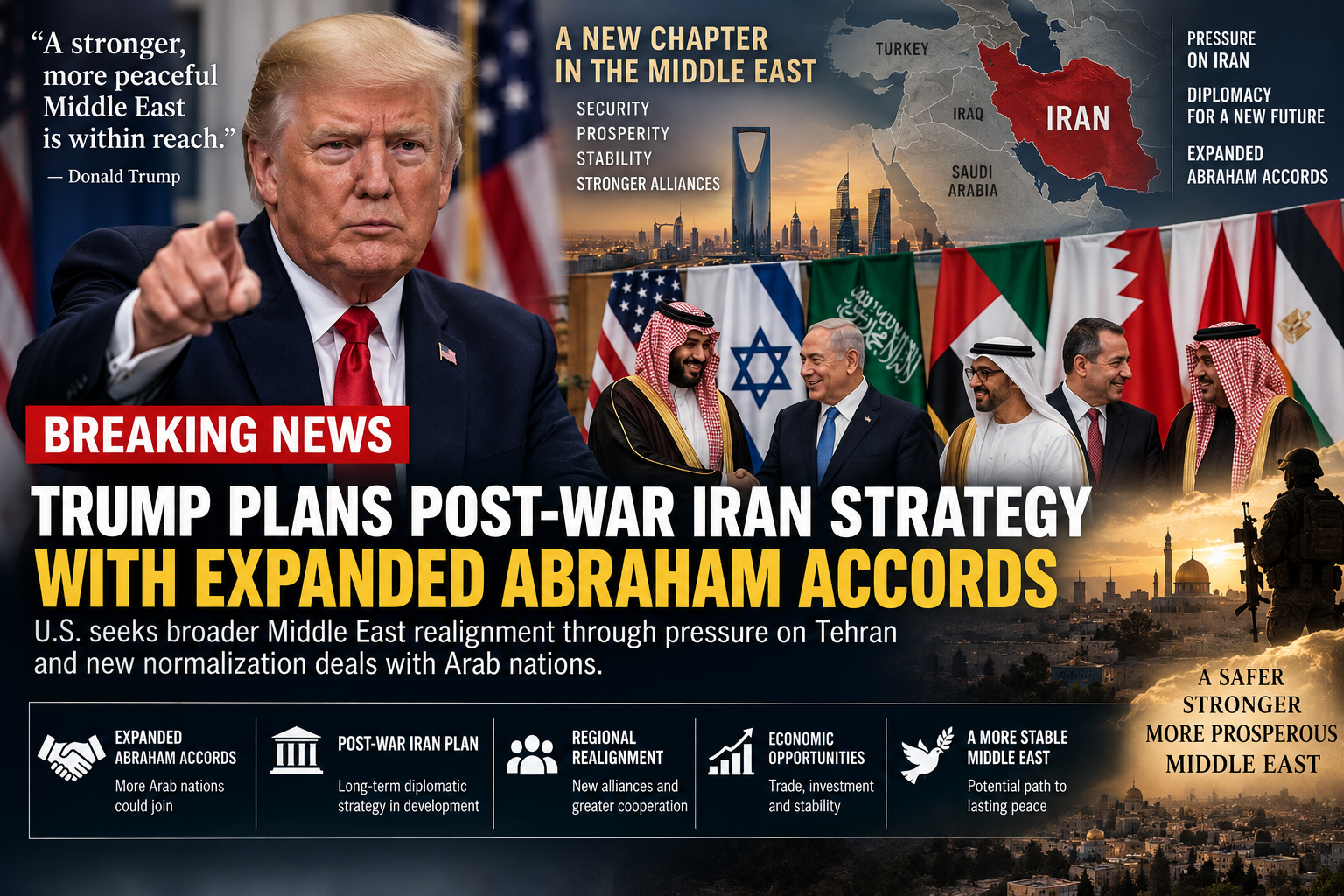
The Trump administration is working on a strategic framework for Iran in the aftermath of a potential conflict while simultaneously pushing to bring additional Arab nations into the Abraham Accords normalization structure, according to reports. The dual-track effort reflects the administration's broader ambition to fundamentally reshape the diplomatic landscape of the Middle East during Trump's second term.
The post-war planning represents a significant signal about how Washington views the trajectory of its confrontation with Tehran. The Trump administration has maintained an aggressive maximum pressure campaign against Iran, targeting its economy and curtailing its nuclear program's advancement through sanctions and diplomatic isolation. Preparing for a post-conflict order suggests officials are actively gaming out scenarios in which the current standoff escalates or resolves in a dramatically different regional configuration.
The Abraham Accords, brokered during Trump's first term and signed in 2020, normalized relations between Israel and several Arab states including the United Arab Emirates, Bahrain, Morocco, and Sudan. The agreements were widely regarded as a diplomatic milestone, bypassing decades of Arab consensus that normalization with Israel would only follow the establishment of a Palestinian state. Expanding those accords has remained a priority for Trump and key members of his foreign policy team.
Saudi Arabia has long been considered the most consequential potential addition to the normalization framework. Riyadh has indicated openness to such a deal but has publicly insisted on meaningful progress toward Palestinian statehood as a precondition — a condition that has complicated negotiations given the current Israeli government's stance on the issue. Whether the Trump administration has a formula to bridge that gap remains unclear.
The convergence of these two policy tracks — pressure on Iran and outreach to Arab partners — reflects a coherent strategic logic that the administration has articulated since returning to office. Proponents argue that isolating Iran while deepening Arab-Israeli ties creates a security architecture that advances US interests and stabilizes the region. Critics contend that the approach marginalizes Palestinian political aspirations and risks miscalculation with Tehran.
Israel's government, which has maintained close coordination with Washington throughout the current period of regional tension, stands to benefit significantly from both pillars of the strategy. Israeli officials have long sought a more formal alignment with Gulf states and have pressed the United States to take a harder line on Iran's nuclear ambitions.
The strategy is still in development, and details about which countries are being approached for potential normalization agreements have not been fully disclosed publicly. The administration's ability to deliver on both fronts will likely depend on the outcome of ongoing pressure on Iran and the degree of flexibility Arab partners are willing to show on the Palestinian question.

Comments (0)
No comments yet. Be the first to share your thoughts.
Leave a comment
Comments are reviewed before they appear.