 Breaking News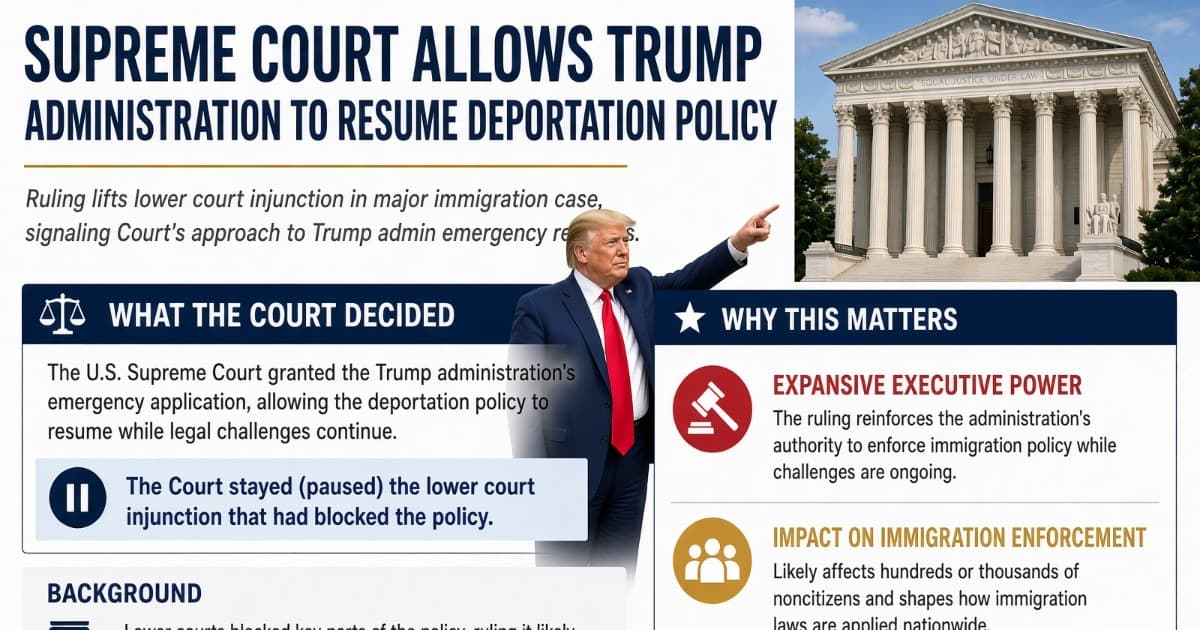
Breaking News
Supreme Court Clears Way for Trump Administration to Restart Deportation Policy
By The Daily Ledger2 min read4 views
The US Supreme Court has allowed the Trump administration to move forward with a contested deportation policy while legal challenges continue in lower courts.
Supreme Court Allows Trump Administration to Resume Deportation Policy
The United States Supreme Court has given the Trump administration the green light to resume a contested deportation policy, handing the White House a significant legal victory in its ongoing effort to expand immigration enforcement.
The ruling, which came as the administration sought emergency relief from a lower court order that had halted the policy, allows deportations to proceed while litigation continues through the federal court system. The decision reflects the Supreme Court's willingness to permit the executive branch to act on immigration enforcement priorities even as the underlying legal questions remain unresolved.
The deportation policy had been challenged by immigrant rights advocates and attorneys who argued it violated due process protections or exceeded the administration's legal authority. A federal court had sided with those challengers, issuing an injunction that temporarily blocked the policy from taking effect. The Trump administration appealed, ultimately turning to the Supreme Court for emergency intervention.
The justices' decision to lift that block does not constitute a final ruling on the merits of the case. Rather, it signals that the Court's majority found the administration had made a sufficient legal showing to justify allowing the policy to operate while the dispute winds through lower courts — a standard that requires demonstrating a likelihood of success and potential harm from delay.
Immigration enforcement has been a defining priority of the Trump administration since it returned to office, with officials moving quickly to expand deportation operations, reinstate previously blocked policies, and pursue new legal authorities. Those efforts have met repeated resistance from federal judges across the country, generating a series of high-profile legal clashes.
Advocacy groups representing affected immigrants criticized the ruling, warning that people could face removal to dangerous conditions before the courts fully resolve the legal questions at stake. The administration, for its part, has framed its immigration enforcement actions as necessary steps to uphold federal law and restore what it describes as border security.
The case is expected to continue in the lower courts, where judges will weigh the full legal arguments over the policy's validity. The Supreme Court may ultimately be asked to issue a definitive ruling on the questions raised, though the timeline for such a resolution remains uncertain.
The ruling adds to a growing body of Supreme Court decisions touching on the scope of executive power in immigration matters, an area of law where the Court has historically granted the government considerable latitude.
##DonaldTrump #TrumpNews #BreakingNews #HotNews #USA #AmericanNews #5000Dollars #StimulusCheck #GovernmentNews #USNews #LatestNews #TrumpAnnouncement #AmericanCitizens #FinancialUpdate #NewsToday

Comments (0)
No comments yet. Be the first to share your thoughts.
Leave a comment
Comments are reviewed before they appear.