 Breaking News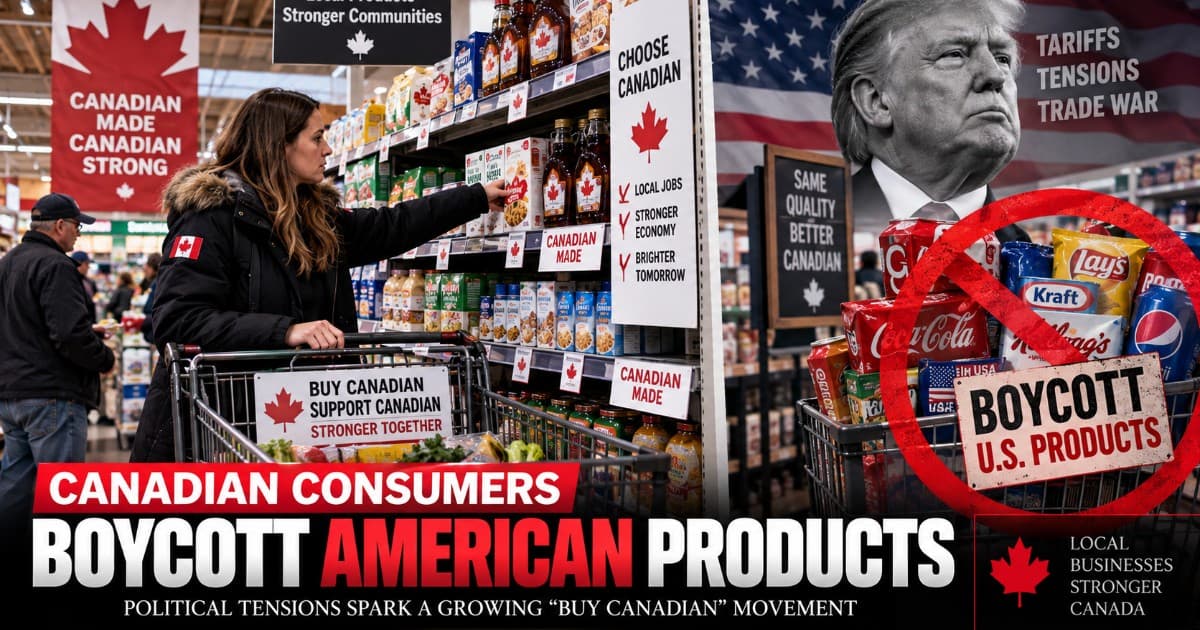
Breaking News
Buy Canadian: Consumer Boycott of US Goods Quietly Reshapes Grocery Store Shelves
By The Daily Ledger3 min read7 views
Canadian shoppers are bypassing American brands in growing numbers, driven by frustration over US trade pressure, pushing retailers to spotlight homegrown…
Canadians Reshape Grocery Shelves in Protest Against US Trade Pressure
In grocery stores across Canada, something has changed. Shoppers are pausing longer in the aisles, turning packages over to check where they were made, and walking past familiar American brands to pick up domestic alternatives. What began as social media frustration has quietly evolved into a consumer movement with visible consequences on retail shelves.
The shift is being driven by deep anger among many Canadians over the trade posture of the Trump administration, which has threatened and in some cases imposed tariffs on Canadian goods, rattling an economic relationship that has long been considered one of the closest and most stable in the world. For many Canadian shoppers, the response has been personal and immediate: stop buying American.
"Mad with America" is how some have described the prevailing mood, and that sentiment is now finding expression in purchasing decisions. Consumers are gravitating toward products stamped with Canadian flags, provincial logos, or the words "Made in Canada," and they are sharing tips online about which everyday staples have domestic alternatives and which do not.
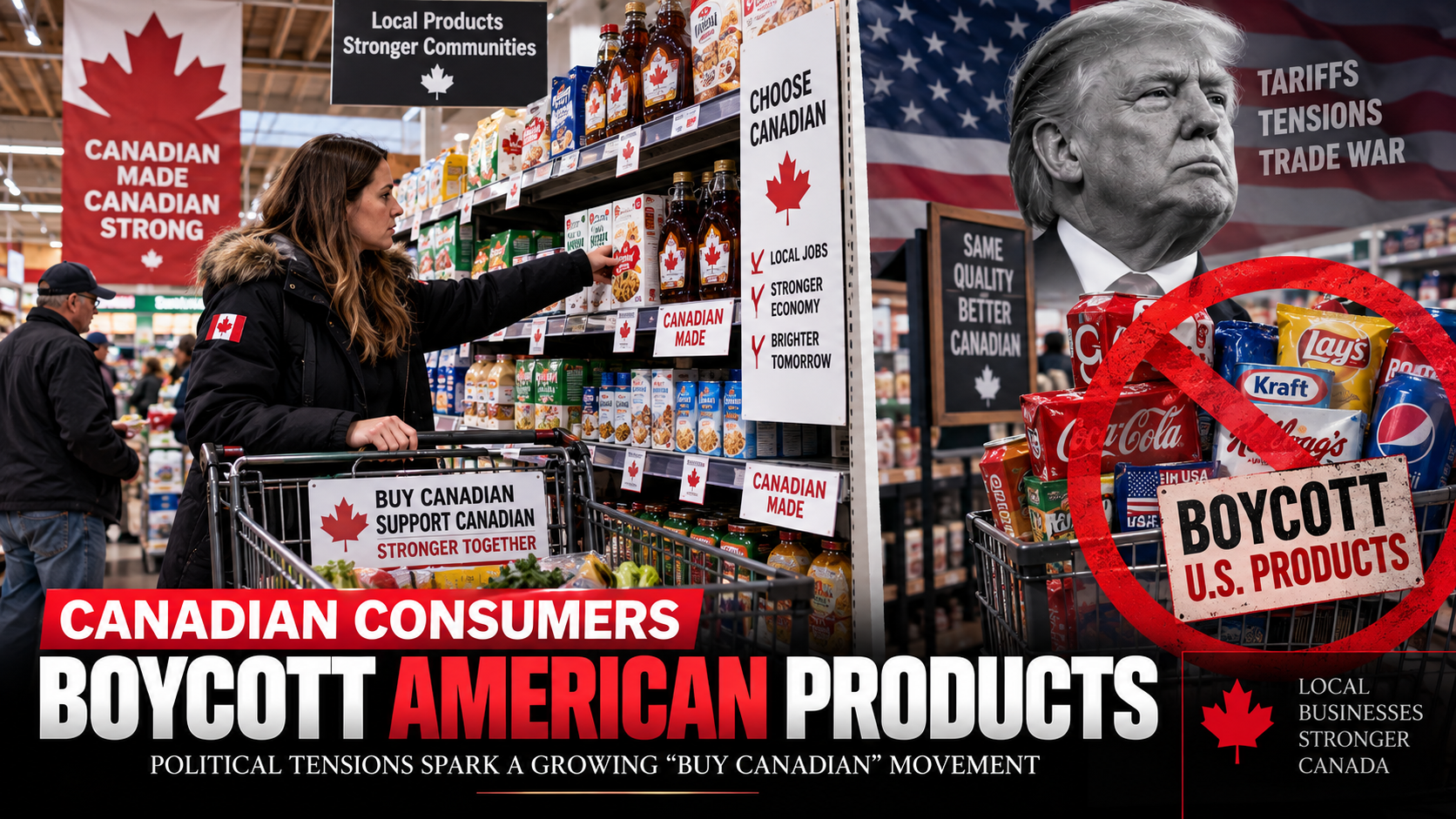
Retailers have taken notice. A number of grocery chains have begun reorganizing sections of their stores to make Canadian-made products easier to find, adding dedicated signage and, in some cases, issuing public commitments to increase the proportion of domestic goods on their shelves. For suppliers, the spike in interest has created both an opportunity and a logistical challenge, as demand for some locally produced items has outpaced what producers were prepared to supply.
The movement has been amplified by digital tools, including apps and crowd-sourced lists that help consumers identify which products are truly Canadian in origin — a task complicated by the deeply integrated nature of North American supply chains, where ingredients, manufacturing, and branding often cross the border multiple times before reaching a store shelf.
The trade relationship between Canada and the United States involves an enormous volume of consumer goods, and American food exporters in particular have long depended on Canadian buyers as a reliable and geographically convenient market. Whether a consumer-driven shift can meaningfully dent those flows remains an open question, but early signals from some retailers suggest that the demand for domestic products is more than a passing mood.
Analysts have noted that similar surges of Canadian economic nationalism have occurred before during periods of bilateral friction, sometimes fading as political tensions eased and sometimes leaving a more lasting imprint on market share. What distinguishes the current moment, some observers argue, is the speed and scale at which the sentiment has spread, fueled by social media and a political climate that has left many Canadians feeling that the relationship with their largest trading partner can no longer be taken for granted.
For now, the maple leaf has become something of a seal of approval in the grocery aisle, and Canadian producers are working to make sure there is enough product behind it to meet the demand.
#Climate


Comments (0)
No comments yet. Be the first to share your thoughts.
Leave a comment
Comments are reviewed before they appear.